Germany's traditional Easter peace marches are taking place from April 2 to 6, with over a hundred events organized in dozens of towns across the country, expecting thousands of participants. The marches, listed on the Network of the German Peace Movement's website, include activities ranging from "Bikes for Peace" tours to concerts and day-long gatherings with speeches addressing the wars in Iran, Gaza, and Ukraine, the Rojava conflict in northern Syria, as well as human rights and climate justice issues.
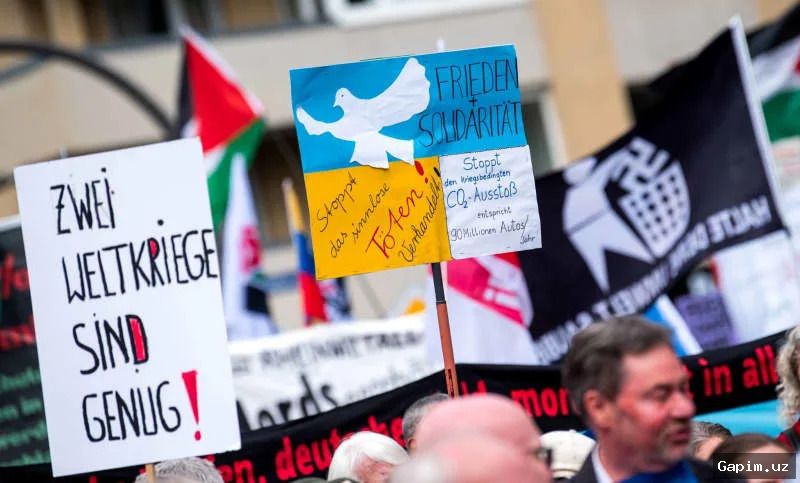
This year's marches are notably influenced by the German government's decision to partially reintroduce military service. Since the beginning of the year, all 18-year-olds have been receiving questionnaires from the military to assess their "motivation and suitability" for service. Young men are obligated to fill out the forms, while women, exempt from compulsory military service by the constitution, may do so voluntarily. The new military service law has triggered nationwide school strikes, and it is anticipated that this year's Easter marches will see a larger contingent of young people. Kristian Golla, spokesperson for the Network of the German Peace Movement, stated that about 20 of the demonstrations will feature speakers addressing the conscription issue.
Golla remarked that there is, unfortunately, no shortage of reasons why peace marches remain relevant today. He told DW: "Whether it's Ukraine and Russia, the Gulf region, Israel and Palestine, or the bombing of Iran—those will be the essential issues for the Easter marches, and of course the strengthening of international law." The marches are decentrally organized, meaning there is no top-down directive from any particular organization determining specific issues or speakers. The German Peace Movement's website indicates that the movement is calling on the government to launch "diplomatic initiatives for the ending of the wars," contribute to strengthening international law, and provide more support for those suffering from war.
The statement also expressed strong criticism of what it termed the government's "selective interpretation of international law," arguing that Germany should condemn the US and Israeli attack on Iran as much as it does Russia's attack on Ukraine. Hendrik Hegemann, a senior researcher at the Hamburg-based Institute for Peace Research and Security Policy (IFSH), noted that despite these valid concerns, he does not expect the Easter marches to attract a massive increase in crowds this year.
Hegemann argued that this is partly because many people—including some within the peace movement itself—feel more ambivalent about current conflicts. He said: "On Ukraine, for example, it's a more complex situation than with Iraq in 2003, the last phase of larger peace protests in Germany, where most people could agree that the attack was wrong. Now we've just seen the fourth anniversary of the attack on Bucha, and of course it's more difficult to mobilize against strengthening Ukraine." Germany's Easter peace marches originated in the early 1960s, directly inspired by the Campaign for Nuclear Disarmament in the UK. They grew rapidly during the early Cold War era, from a few thousand participants in the early 1960s to huge crowds of hundreds of thousands by 1968.
Participants have traditionally been brought together by a wide range of organizations, including churches, trade unions, left-wing political parties, and pacifist groups like the German Peace Society (DFG-VK). These latter groups, originally inspired by conscientious objectors, have recently found themselves providing increasing advice and support for young people seeking to refuse military service. However, Hegemann pointed out that the Easter marches have struggled to mobilize people in recent years. He stated: "Those traditional organizations just don't have that same mobilization potential anymore, and some of them have changed their own stances on peace policy."
Hegemann also mentioned that in recent years, some Germans have been discouraged from joining the Easter marches because certain far-right elements and divisive political figures like Sahra Wagenknecht have co-opted the cause. Nevertheless, Hegemann believes that pacifism still holds an important place in Germany's public debate. He said: "They certainly have less approval in the broader debate than they once had, but it remains an important position. It's a very old, very established tradition that especially in a time of re-militarization tries to point to alternatives, tries to ensure that certain ideas get questioned."
The sense of security in Germany has dropped dramatically over the last few years. The polling institute Allensbach published a report in February stating that only 55% of Germans feel safe—down from 60% in 2025 and over 70% in 2019. Approximately two-thirds of Germans now fear that the country could become directly involved in a war. Allensbach's annual "Security Report" also found that fewer Germans believe NATO will keep them safe, largely due to a lack of trust in the US as a guarantor of peace in Europe. Only 42% think the alliance would successfully repel a Russian attack, down about 14 percentage points from the previous year. Golla commented: "Of course, people feel threatened by the overwhelming global situation. In light of the world situation, I do of course expect more people [than last year]."
However, he did not want to sound overly optimistic about the expected turnout this Easter weekend: "I know that the weather is a problem—the weather isn't expected to be that good," he said. "Still, I'm carefully optimistic that there will be more people than last year."
Source: www.dw.com