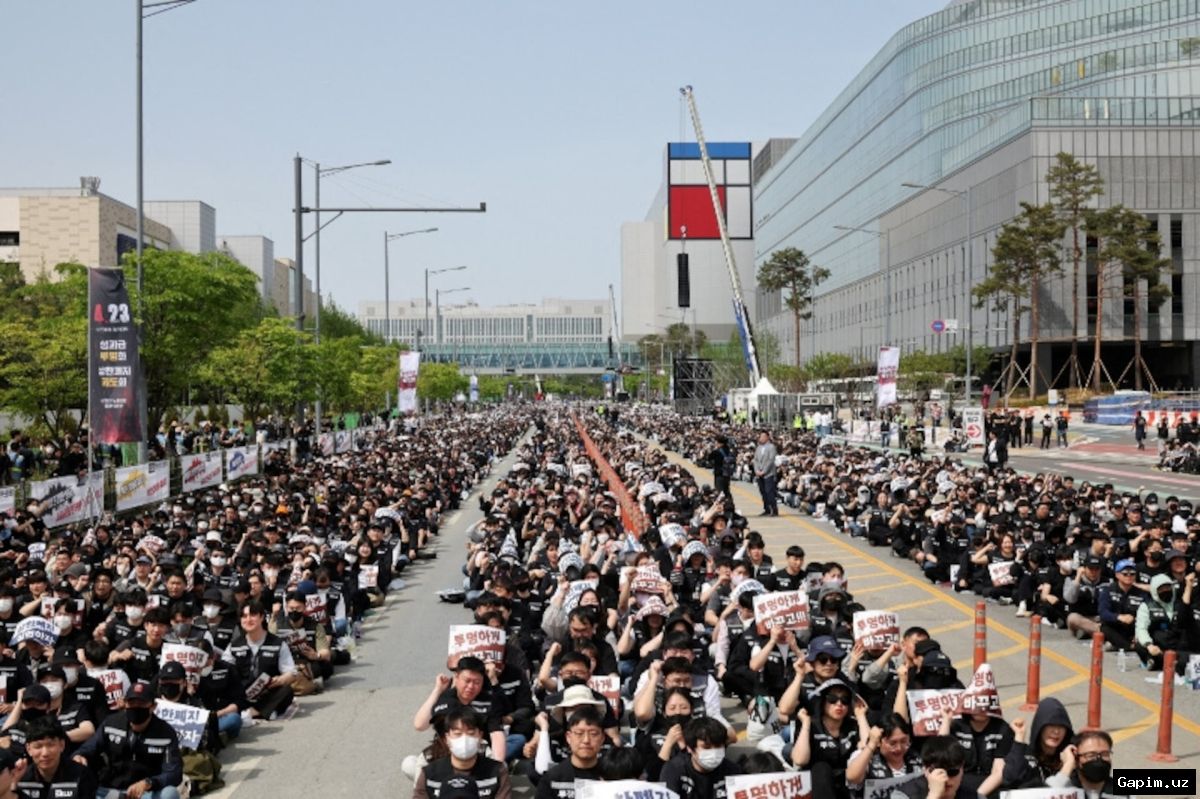
Samsung Electronics, the South Korean chipmaking giant, is confronting one of the most serious worker strikes in its history. The company’s union has announced that over 48,000 employees will stop work on Thursday for 18 days to protest bonus payments.
The electronics titan is a major engine of South Korea’s economy, generating revenues equivalent to about 12.5 percent of the country’s gross domestic product (GDP). The strike threatens to disrupt production of memory chips, where Samsung is the world’s largest producer, impacting global supply chains.
The union demands that Samsung abolish the current cap on bonuses, which stands at 50 percent of annual salary, and instead allocate 15 percent of the company’s annual operating profit to bonuses. Samsung has defended its pay scheme, calling the union’s demands “unacceptable” and warning that accepting them would undermine management principles.
Government-mediated talks on Wednesday failed to reach a consensus. Union leader Choi Seung-ho said the union accepted a final proposal from a government mediator, but the 18-day strike would proceed as management had not conceded on one remaining issue. Samsung stated that “accepting the labour union’s excessive demands would undermine the fundamental principles of company management.”
Worker strikes at Samsung were rare until recently. In June 2024, the company faced its first-ever industrial action, followed by a three-day strike in July involving thousands of workers. The current strike involves about 48,000 employees, or 38 percent of the workforce, mostly in the chip division.
The Bank of Korea estimated that a general strike at Samsung could cut 0.5 percentage points off the country’s economic growth this year, with losses of about 30 trillion won ($20 billion). Prime Minister Kim Min-seok warned of “unimaginable economic damage.”
A court partially granted Samsung’s request for an injunction, ordering staffing levels to be maintained at essential production units. The government has the power to invoke an emergency arbitration order, last used in 2005, but a labor ministry spokesperson said it was too early to consider that step.
Source: www.aljazeera.com