Eleven weeks after the start of the Iran war, the Strait of Hormuz remains closed to naval traffic, bleeding the global economy far beyond the Gulf. Iran's Islamic Revolutionary Guard Corps (IRGC) maintains an iron grip over the narrow, strategic waterway, while a corresponding United States naval blockade on Iranian ports has failed to reopen it.
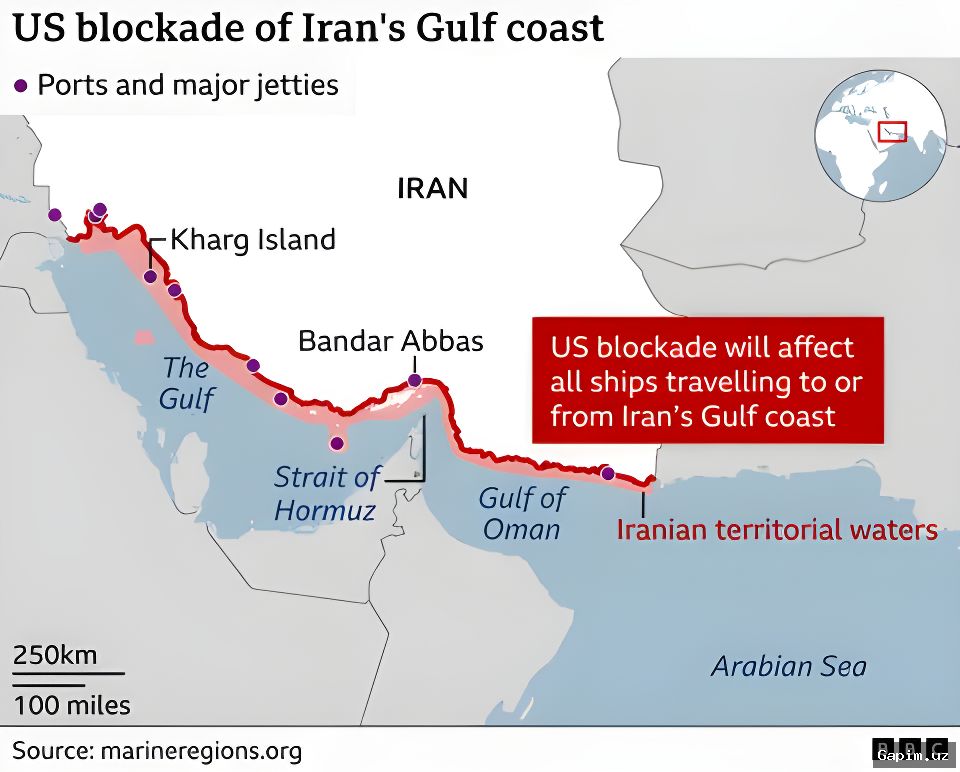
Before the war began, between 120 and 140 ships travelled through the strait each day, about half of them oil tankers carrying some 20 million barrels of oil between them. Now, only a few vessels whose owners have negotiated with the IRGC are permitted to pass.
On Wednesday, Iran said it coordinated the transit of 26 vessels through the Strait of Hormuz in 24 hours, two days after announcing the formation of the Persian Gulf Strait Authority (PGSA), a new body to provide “real-time updates” on operations in the strait.
Since the announcement of a temporary ceasefire between the US and Iran in April, Iran has been working on formalising a mechanism to charge a transit fee from ships crossing the critical chokepoint, through which 20 percent of the world’s oil and liquefied natural gas (LNG) are shipped during peacetime. Tehran has reportedly already charged fees as high as $2m per ship for transit since the war started.
Even though countries opposing Tehran say this is illegal, it may still be less expensive than the overall cost of the closure of the strait each day. Experts say paying Iran is cheaper than remaining stranded.
“From an economic perspective, a negotiated transit arrangement [with Iran] now makes more sense than continued closure,” said Mohammad Reza Farzanegan, an economist at Germany’s Marburg University. However, he noted political complications.
International law protects free transit through natural straits like Hormuz, barring countries from imposing passage tolls. However, services such as security controls, inspections and insurance regimes can be charged for.
Economist Farzanegan said Iran, like Turkey, could justify a negotiated mechanism for transit fees or service-based contributions through natural straits as payment for maintaining a safe passageway. However, Iranian-American economist Nader Habibi pointed out differences: in Turkey’s case, the transit passes entirely through its territorial waters, while the Strait of Hormuz passes through the territorial waters of Iran and Oman, with external parts reaching the UAE.
Iran’s newly-formed PGSA published a new map of Hormuz, stretching from Kuh-e Mubarak in Iran to south of Fujairah in the UAE, and from the tip of Qeshm Island to Umm al-Quwain. Experts argue that regional cooperation is the most realistic path to stable transit through the Strait of Hormuz.
Source: www.aljazeera.com