Japan is witnessing a sharp rise in bear encounters, with experts pointing to declining hunter numbers and shrinking natural habitats as key drivers. The government's 2026 environment white paper labeled bears "a serious threat to public safety and peace."
Jeff Kingston, an American academic, was attacked by a bear in 2014 in Gunma Prefecture. His dogs intervened, saving his life, but he sustained scars on his forehead, arms, and shoulders. Kingston noted bears seem "ornier and hungrier than before."
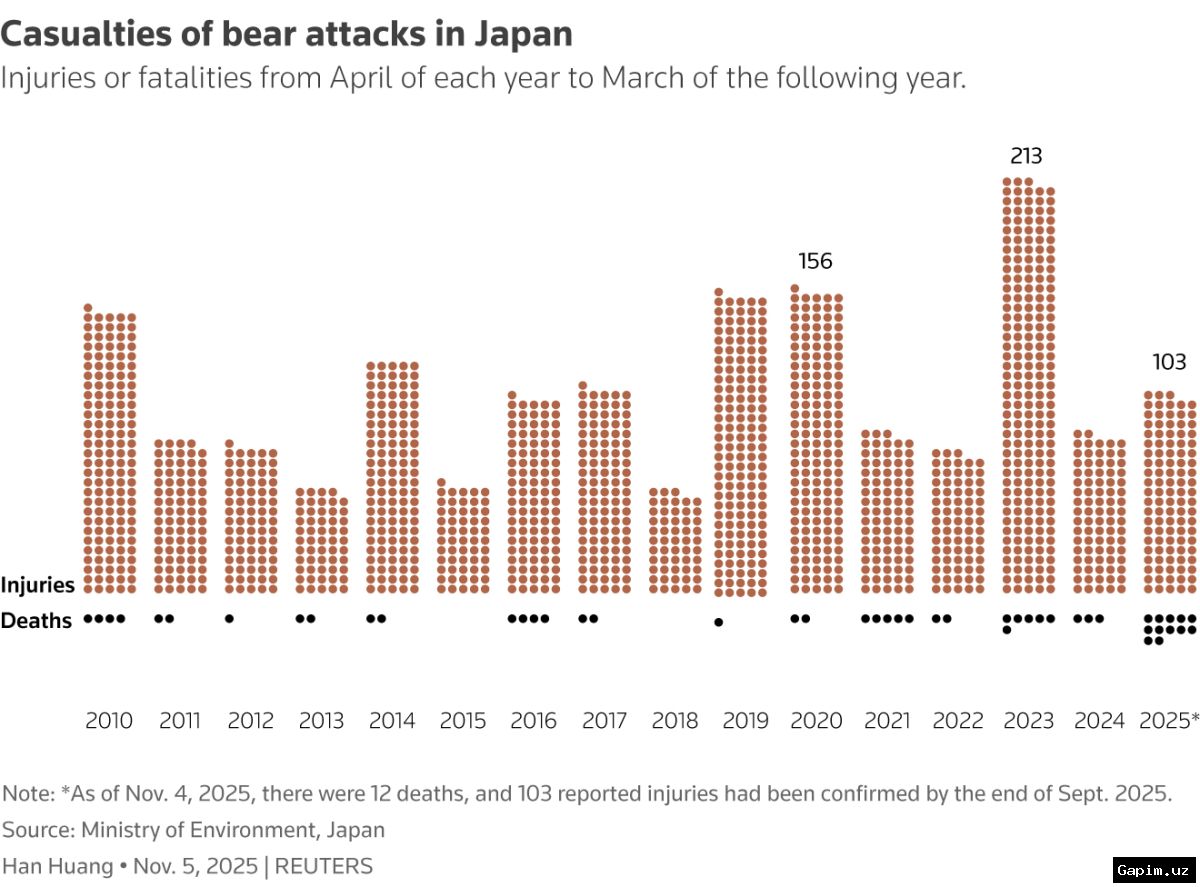
Official data shows over 50,000 bear sightings in the fiscal year ending March 31, with a record 238 injuries and 13 deaths. Since April 1, 25 people have been injured and four killed, suggesting another record year.
Bears are increasingly venturing into urban areas. In Utsunomiya, a bear was caught on security cameras running through a shopping arcade. In Fukushima, a black bear wounded four people.
Naturalist Kevin Short attributes the rise to loss of traditional feeding habitats, such as beech nuts and acorns, pushing bears toward farms and villages for apples, persimmons, and garbage. A decline in hunters has also emboldened bears, with research showing lower stress levels and reduced fear of humans.
Global warming exacerbates the issue: warmer winters and early springs lead bears to emerge from hibernation earlier, forcing them to forage longer and more aggressively.
Solutions include promoting hunting in rural areas and technological innovations. A Hokkaido company developed "Monster Wolf," an animatronic scarecrow with glowing red eyes, which has seen a surge in orders. Sophia University professor Yusuke Fukazawa created an AI-based app predicting bear encounter probability with 70% accuracy, aiming to improve it further.
Source: www.dw.com