The most fundamental rift in Israeli politics is arguably not the wars it is fighting on multiple fronts, nor the international isolation stemming from its genocidal war in Gaza. Instead, the conscription of young ultra-Orthodox men into the military continues to divide the country’s major political parties and bring demonstrators to the streets.
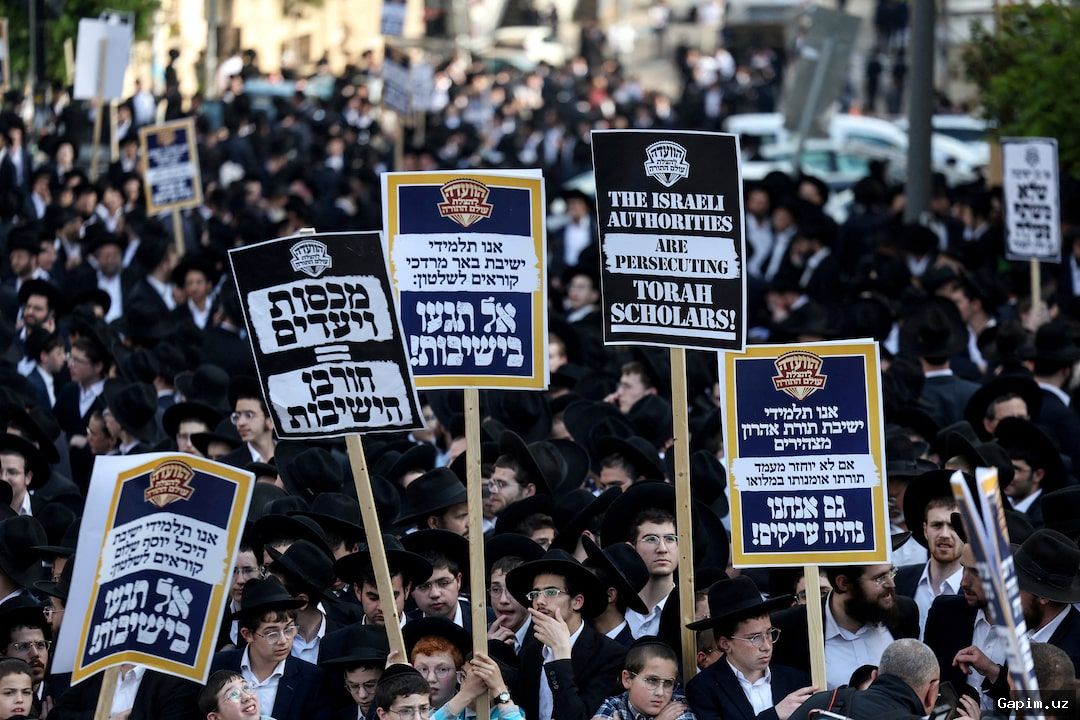
Thousands of ultra-Orthodox Jewish men brought city centers across central Israel to a halt on Thursday night as they protested against the arrest of their fellow adherents for refusing conscription into the army.
Their refusal to serve in the military is not, however, out of a moral objection to Israel’s various wars, but instead because they view serving in the army as diluting their faith and drawing them away from studying it.
Protests by angry young ultra-Orthodox men have become regular occurrences across Israel. Violence is routine. Dozens of police officers and protesters have been injured, and scores more arrested for their involvement in the unrest, with the blockage of streets and closure of parts of city centers becoming usual.
The threat of losing parliamentary support over the issue from the two main ultra-Orthodox parties, Shas and United Torah Judaism (UTJ), has pushed Prime Minister Benjamin Netanyahu’s coalition to bring forward a bill to dissolve parliament, as well as align itself with what stands to be an unpopular bill going through parliament that, if successful, promises to enshrine the exemption of ultra-Orthodox religious students from the draft.
Praising the advancement of the bill, parliamentarian Yisrael Eichler of the UTJ described it as “a declaration of holy war against those who blaspheme God, persecute the Torah and oppose those who study it”, as fellow UTJ member of parliament Meir Porush referred to the bill’s opponents as “anti-Semites” and “enemies of the Torah and its students”.
Both said that Haredi (ultra-Orthodox) parties were compelled to bring forward the bill due to the “systematic persecution of Torah scholars” by “dictatorial jurists”, in a reference to members of Israel’s Supreme Court, whose longstanding opposition to their exemption has seen the homes of individual judges targeted for violence by protesters.
“I think ultra-Orthodox recruitment could be one of the main issues in the election campaign,” Israeli political analyst Nimrod Flaschenberg said. “It’s easy for politicians to target the draft exemption specifically, as society as a whole has grown more militaristic through the [Gaza] genocide,” he continued.
Since the 2010s, Israel’s Supreme Court has repeatedly struck down laws and extensions preserving blanket draft exemptions for the ultra-Orthodox community, ruling they violate equality before the law. In June 2024, it went further still, declaring the system unlawful and ordering the conscription of eligible ultra-Orthodox men, intensifying political conflict and triggering protests, arrests and increased violence between the state, the military and ultra-Orthodox leadership.
In the minds of many ultra-Orthodox, the army served as a “melting pot” that risked secularising ultra-Orthodox recruits and distracting them from Torah study, which their leaders framed as a form of national service of its own, providing “spiritual protection” for the Jewish people, Benjamin Brown, an authority on ultra-Orthodox Judaism at the Israel Democracy Institute, said.
Polls show that about four-fifths of Israelis support conscripting ultra-Orthodox men or sanctioning draft refusal. A survey by the Israel Democracy Institute found 85 percent back sanctions on ultra-Orthodox men who refuse to serve, including ending state benefits for students whose families rely on them.
Israel’s opposition has already seized upon the advantage. Former Prime Minister Naftali Bennett, one of Netanyahu’s main rivals, warned a conference earlier this month that the failure to confront the exemption represented a “slow-motion path to suicide”.
However, given both the ultra-Orthodox community’s size and the strength of feeling involved, some analysts doubted the determination of the opposition to truly grasp the nettle of ultra-Orthodox conscription ahead of the election later this year. “Everything is moving faster and more dramatically towards the election,” analyst Ori Goldberg told Al Jazeera. “As we get closer, the opposition is falling over itself to be seen as not bending the knee to the ultra-Orthodox while, at the same time, secretly preparing to bend the knee.”
Source: www.aljazeera.com