Iran's Islamic Revolutionary Guard Corps (IRGC) has warned commercial vessels to only use routes through the Strait of Hormuz approved by Tehran, reopening a point of friction in fragile negotiations between the United States and Iran over the future of the strategic waterway.
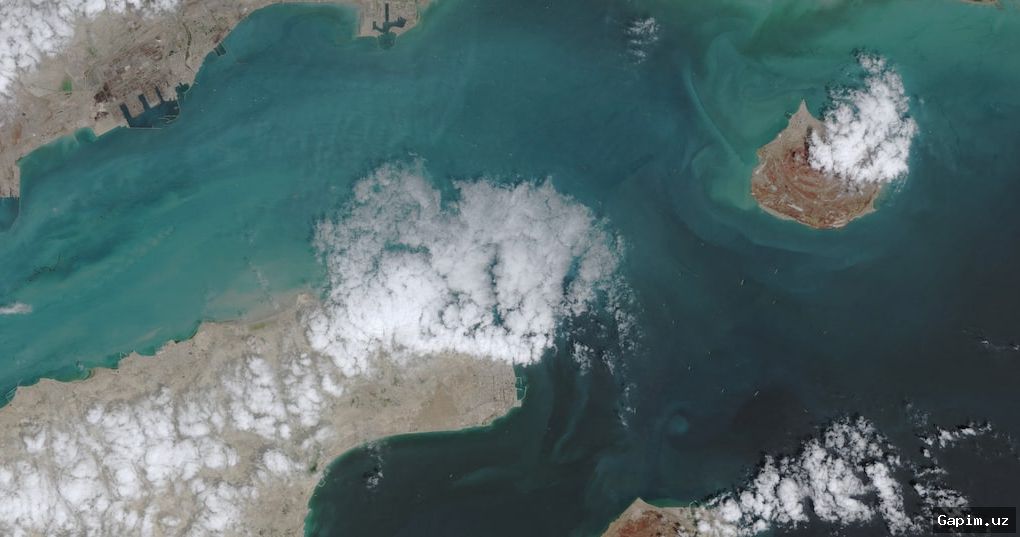
The warning came after Oman announced a new shipping transit route through the strait on Wednesday, saying it had coordinated the route with the International Maritime Organization (IMO) as maritime traffic slowly resumes following weeks of disruption.
The dispute remains one of the unresolved issues after a memorandum of understanding (MoU) was signed by the United States and Iran last week, which largely halted hostilities in the four-month US-Israel war on Iran and launched a 60-day negotiation process aimed at reaching a broader peace agreement.
The MoU, which includes the reopening of the strait, followed months of severe disruption to shipping after Iran effectively closed it, and the US imposed a corresponding naval blockade on Iranian ports. Both Washington and Tehran have declared the strait open to commercial shipping, but questions remain over whether Iran will seek greater control over vessel movements, impose transit fees after the 60-day period, or whether disagreements could derail a permanent agreement.
The Strait of Hormuz is one of the world's most strategically significant waterways, with around one-fifth of global oil and LNG supplies normally transiting the narrow passage. According to the US Energy Information Administration, about 20 million barrels of oil and petroleum products passed through daily in 2025, representing hundreds of billions of dollars in annual energy trade.
The IRGC said Oman and the IMO announced the new corridor without consulting Tehran. "The only authorised transit routes through the Strait of Hormuz are those designated by the Islamic Republic of Iran," the force stated, adding that ships must maintain contact with the IRGC Navy while transiting.
Iran first issued its own map of acceptable routes in April, showing ships should pass much closer to the Iranian coast than previously. The warning came after a Liberian oil tanker transited the strait on Thursday using a route much closer to Oman's coastline.
Al Jazeera's Resul Serdar, reporting from Tehran, said the IRGC appeared frustrated that the Omani route partially bypasses Iran's direct control over shipping. "Control of the Strait of Hormuz has been a huge leverage for Iran to put pressure on its adversaries and the global economy since the beginning of the war," he said.
Oman defended the corridor, saying it was intended to restore safe navigation while complying with international law. Foreign Minister Badr Albusaidi stressed that "future arrangements related to the strait do not involve imposing any transit fees."
In the MoU signed last week, Iran agreed to "make arrangements using its best efforts for the safe passage of commercial vessels with no charge, for 60 days only, from the Persian Gulf to the Sea of Oman and vice versa." The agreement also states that "demining by the Islamic Republic of Iran will be instated within 30 days."
However, the memorandum does not specify what will happen after the initial 60-day period. Ali Vaez, Iran project director at the International Crisis Group, said "the important thing now is that the Iranians do not start taking fees or other tolls, because that is not provided for in the memorandum of understanding." He added that "there is no distinction between the IRGC and the state. The IRGC is calling the shots."
International law generally protects the right of transit through international straits, making it difficult for coastal states to impose unilateral fees. Last week, Iran announced it would waive planned fees for 60 days while talks continue in Switzerland, suggesting charges may be introduced after the negotiating period expires.
Iran's chief negotiator, Mohammad Bagher Ghalibaf, signaled that "Hormuz will never return" to its prewar status. US Secretary of State Marco Rubio dismissed the idea of fees, stating, "It's an international waterway. No country is allowed to charge tolls or fees on an international waterway." He added that "there is zero support among Gulf countries for any sort of toll or fees."
Commercial shipping has partially resumed, but traffic remains well below normal levels. According to shipping analytics company Kpler, confirmed crossings rose to 70 vessels on Thursday. However, IRGC warnings against use of the Omani route could create a new source of contention, with incomplete demining and unresolved questions over inspections and future governance.
Oil prices have dropped to the lowest level since before the Iran war, with Brent crude falling to $72.24 a barrel on Thursday, still above the prewar price of $66.
The future administration of the Strait of Hormuz is only one of several issues to be resolved within 60 days, with another major sticking point being Iran's nuclear program. IAEA Director-General Rafael Grossi said the agreement explicitly provides for international monitoring, but Iran has stated that inspectors' access to damaged nuclear sites will only be considered as part of a final agreement.
Israeli forces remain deployed in parts of southern Lebanon, and Israeli strikes have continued despite the MoU calling for "a permanent end to the war on all fronts, including Lebanon." Vaez said both sides have strong economic incentives for peace: "The situation in the Strait had become one of mutually assured economic destruction. The United States was facing rising energy prices ahead of the midterm elections, while Iran was already in a deep economic hole before the conflict began."
Source: www.aljazeera.com