The United States has launched a second, larger barrage of airstrikes against Iran in two days, as fragile peace talks between the two countries appear at risk of collapsing.
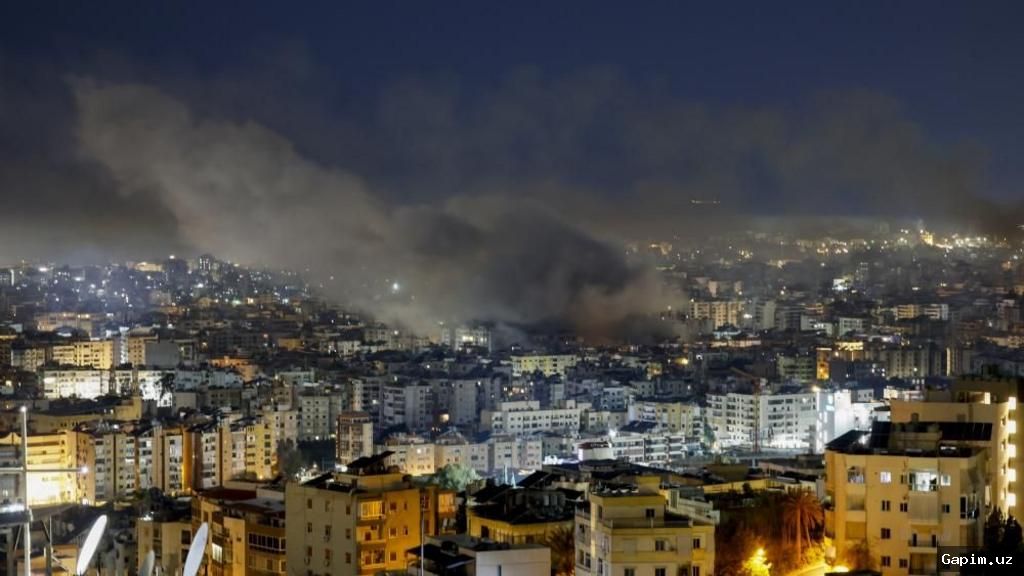
The US struck several parts of Iran's capital Tehran early on Thursday, just hours after hitting several cities in the southern part of the country on Wednesday. At least 14 people have been killed in the two days of attacks, including at least one member of the Islamic Revolutionary Guard Corps (IRGC).
Iran has retaliated by striking US military assets and infrastructure in neighboring Gulf countries. The latest round of tit-for-tat strikes erupted after Iran's attacks on commercial ships in the Strait of Hormuz earlier this week.
The US attacks come as the days-long funeral of late Iranian Supreme Leader Ayatollah Khamenei, who was killed in US-Israeli airstrikes in February, is underway.
US President Donald Trump told reporters at the NATO summit in Ankara, Turkey, that he believed the memorandum of understanding (MoU) with Iran was "over." However, he added that he might allow peace talks to continue for now, leaving the process in uncertainty.
Experts say the US faces a dead end with Iran and that bombing is not working. "The US faces a dead end with Iran, and they need to change their approach. Bombing is not working," said Alam Saleh, a professor of politics at the University of Bradford.
US Central Command (CENTCOM) said it hit about 90 military targets across Iran on Thursday, marking the largest such escalation since both sides signed the MoU in June.
On Wednesday, CENTCOM said it had struck about 80 Iranian military targets the night before as a response to Iran's attacks on three commercial vessels transiting the Strait of Hormuz.
Washington also revoked a sanctions waiver on Iranian oil that was part of the MoU.
Iran's Ministry of Foreign Affairs condemned the dozens of US attacks, including on two railway bridges, calling Washington's claim that they were in response to attacks on vessels in the Strait of Hormuz a "false pretext."
Iranian authorities have denounced the US strikes as a "war crime" and accused Washington of violating the interim deal aimed at ending the war.
Parliament Speaker Muhammad Ghalibaf accused the US of "bullying" tactics. "If you strike, you'll get hit," he wrote.
Analysts say disagreement over the interpretation of Article 5 of the MoU, which concerns control of the Strait of Hormuz, is the biggest sticking point. Article 5 calls for Iran to reopen the strait and allow the immediate recommencement of commercial traffic.
Iran has sought to impose control over the strait and use it as strategic leverage at the negotiating table. Iran's blockade of the strait triggered a global energy crisis.
Both sides accuse each other of violating the MoU. Iran claims the US has failed to honor its commitments by restarting attacks, while Washington blames Tehran for failing to allow ships to safely transit the strait.
Source: www.aljazeera.com