Tehran, Iran – Saudi Arabia and Pakistan have expanded their mutual defense pact to include Turkey, raising questions about the emergence of a new security architecture at a time when the United States and Iran have yet to reach a final deal to end their war.
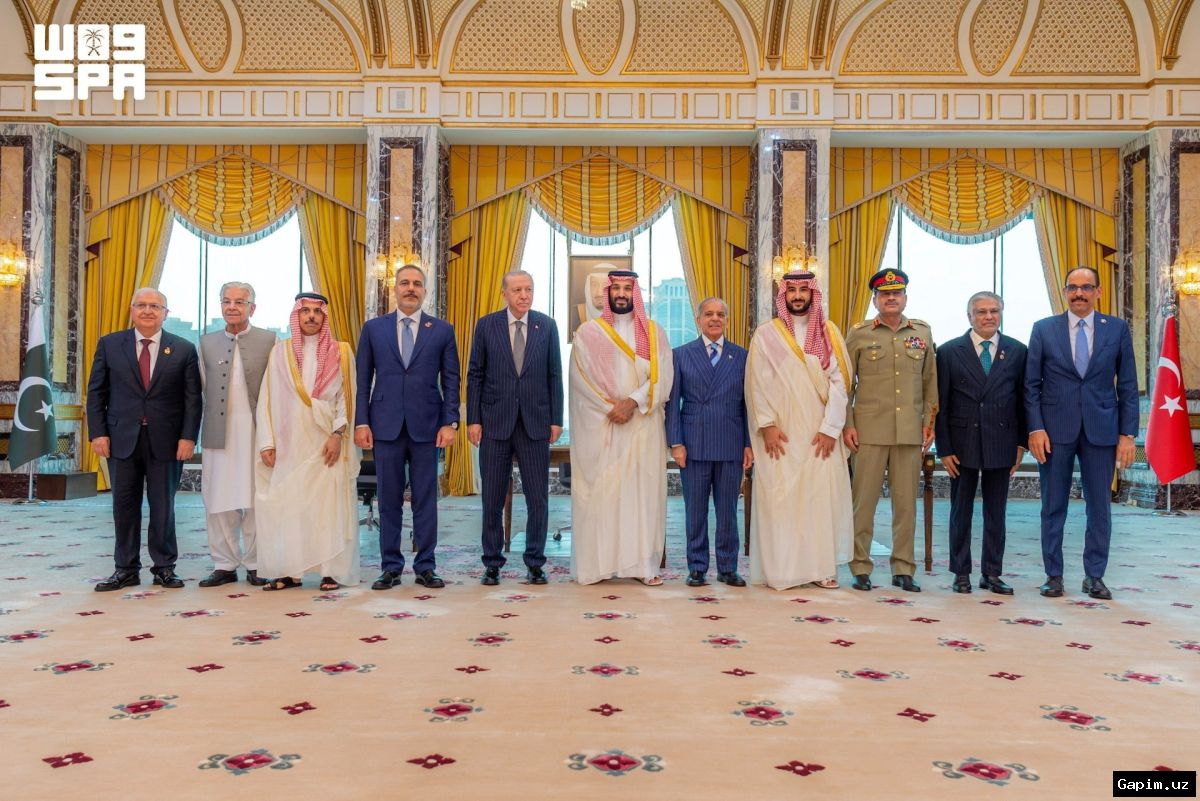
Under the agreement signed in Mecca on Friday, any external armed attack on either of the three countries will now be considered an attack on all. The trilateral pact was announced more than five months after the US and Israel launched a bombing campaign against Iran, triggering a conflict that quickly spread to the Gulf and disrupted maritime traffic through the Strait of Hormuz.
Pakistan, Saudi Arabia, and Turkey, however, have been careful not to antagonize any regional or international actors while finalizing what they said was the result of years of hard work and negotiations. They have stressed the pact, which does not identify a specific threat, is not targeted against any country – particularly Iran – and does not abrogate or replace any existing agreements with others.
In Tehran, the reaction has largely been subdued, with officials mostly focusing on aspects of regional and Muslim cooperation and what they perceive as a declining role for the US. Iran's Foreign Minister Abbas Araghchi said on Friday that when Muslims stand together, “we can face every challenge by malicious outsiders head-on.” “Time to rely only on ourselves and embrace true brotherhood,” he wrote on X, without directly mentioning the trilateral agreement signed hours earlier.
But Iran certainly sees some reasons to be concerned in the long run, according to Hamidreza Azizi, a researcher and analyst on Iran and Middle Eastern geopolitical dynamics. The associate at Clingendael Institute told Al Jazeera that the timing is important, since the agreement comes after months of a war in which Saudi Arabia has faced attacks from the Iran-aligned Houthis in Yemen and armed groups in neighboring Iraq. “From Tehran's perspective, the concern is therefore not only that the pact could strengthen Saudi deterrence, but that it could eventually facilitate coordinated pressure on Iran in Yemen, Iraq, and even economically through Turkey and Pakistan,” he said.
On Sunday, the Houthis claimed another successful drone strike on the Saudi Aramco refinery in Jizan. Saudi Arabia confirmed a fire was extinguished without inflicting casualties, but did not mention the cause. Separately in Yemen, Houthi missiles and drones struck the Saudi-backed and internationally recognized government's Red Sea port of al-Makha, with officials reporting at least seven people killed, 15 wounded, and severe infrastructure damage. The Yemeni group, which has also been hitting or turning back Saudi-linked ships in the Red Sea over recent weeks, said it targeted weapons depots.
Iran's Ministry of Foreign Affairs has not released a formal statement about the Pakistan-Saudi-Turkey deal, but a senior official outlined Tehran's diplomatic thinking in an interview with local media on Saturday. Hossein Noushabadi, a director general for parliamentary and legal affairs, told the state-linked ISNA news service that the ministry predominantly regards the agreement within the context of a diminishing direct US presence in the region. The pact “is being viewed as the beginning of the collapse of US security hegemony in West Asia and the Persian Gulf,” said Noushabadi.
Political scientist Vali Nasr said he does not believe the pact is currently a threat to Tehran. “For now, these are all elements of a post-American security order in the Middle East,” the professor of international affairs and Middle East studies at Johns Hopkins University told Al Jazeera. “This is also as much a balance to the Abraham Accords as a direct challenge to Tehran,” he added, in reference to the US-pushed regional normalization effort with Israel, which US President Donald Trump last month tied with a civil nuclear deal sought by Saudi Arabia. Mehran Kamrava, a professor of government at Georgetown University of Qatar, also agreed that decision-makers in Iran do not immediately feel threatened by the pact, especially since they have maintained cordial relations with both Pakistan and Turkey even under trying circumstances.
However, not all inside Iran are content with the pact, with some hardline lawmakers and media arguing that it could ultimately be directed against the “resistance front” of Tehran-backed armed forces across the region and degrade Pakistan's credibility as a main mediator between Iran and the US and others. Ebrahim Azizi, a member of the Iranian parliament's National Security and Foreign Policy Commission, said in a more hawkish viewing of the pact: “Warning: Miscalculation is a historical mistake. Iran has proven that every error comes at a cost. Balance is the only way forward,” he wrote on X.
Clingendael Institute's Azizi said Tehran's priority will likely be to avoid turning the pact into an explicitly anti-Iranian coalition amid a war with regional repercussions, and that would mean preserving individual relations with each of the three countries. He said Tehran can also continue to emphasize its long-standing argument that regional security should ultimately be organized by regional states rather than external powers. Experts also said it could be a possibility that Iran itself would be seeking potential membership in the pact in a distant future, but that would mean a sustainable end to attacks in the Strait of Hormuz and across the region, while expansion to other regional Arab states seems more plausible in the near term.
Source: www.aljazeera.com