The Pentagon has confirmed that the final US troops deployed to Iraq as part of the anti-ISIL mission have left the country. The announcement on Wednesday culminated a years-long withdrawal process, which Iraq’s government has hailed as an important step in reclaiming the country’s sovereignty amid two decades of war and foreign intervention.
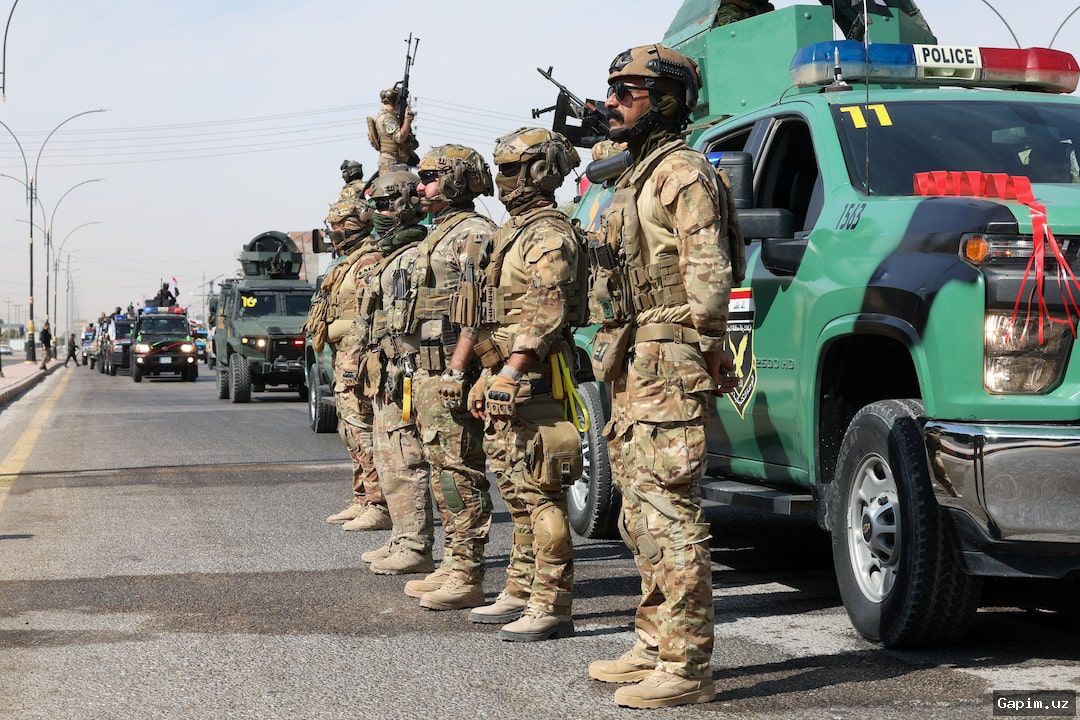
In a statement, Defense Department spokesman Sean Parnell said the remaining US troops and other international coalition forces, as well as equipment, had conducted an “orderly departure” from the Erbil Airbase in the semi-autonomous Kurdistan region. A US-led coalition initially invaded Iraq in 2003 as part of the so-called Global War on Terror, with deployment numbers reaching a peak of about 170,000 US military personnel in 2007. The US withdrew troops in 2011, but redeployed them in 2015 amid the rise of ISIL in Iraq and Syria.
The few hundred remaining foreign troops were consolidated in Erbil at the end of last year, after shifting to an advisory role in the wake of ISIL’s territorial defeat in 2017. Parnell said the US withdrawal represented “the success of a 12-year campaign that defeated ISIS as an organised military threat in Iraq and across the region”. “It also marks a transition from a wartime coalition mission to an Iraqi-led security effort supported by a more normal bilateral security relationship,” Parnell said. US President Donald Trump initially announced in 2020 a complete troop withdrawal from Iraq as part of his earlier pledge to end Washington’s so-called “endless wars”. The final withdrawal plan was inked by former US President Joe Biden and former Iraqi Prime Minister Mohammed Shia al-Sudani in 2024.
Parnell said the departure means that the “primary responsibility for addressing Iraq’s remaining security challenges, including ISIS [ISIL] remnants and Iran-aligned militias that undermine Iraqi sovereignty and regional stability, now rests with the Government of Iraq”. “We expect the Iraqi Security Forces, including the Peshmerga [Kurdish forces] and other security forces in the Iraqi Kurdistan Region, to lead the continuing effort to secure Iraq and keep ISIS remnants suppressed,” he said. “The Department of War will continue to provide targeted training and intelligence support to our Iraqi partners.” The US military command that oversees the Middle East, CENTCOM, said that the task force overseeing anti-ISIL operations has been relocated to Jordan, with hundreds of US troops still stationed in Syria. All told, the base in Erbil had hosted 1,500 US and other coalition forces prior to the departure, according to CENTCOM.
The departure represents a precarious new phase of security in Iraq, which has remained relatively stable despite being enveloped by conflict on its borders in recent years, notably the US-Israeli war with Iran since February. Iraqi Prime Minister Ali al-Zaidi has praised the withdrawal as the beginning of a new era for Iraq, with US ties shifting to more traditional economic and security bilateral relations. He has called on regional and foreign powers to invest in Iraq. The withdrawal comes as al-Zaidi undertakes a wider effort to disarm powerful militias in the country, including several closely aligned with Iran, by June 2027. Several of those groups have long pointed to the US presence as justification for maintaining their own weapons and chain of command.
Experts have said al-Zaidi’s approach could eventually lead to an internal standoff within the country, as well as renewed external pressure from the US if Iran-aligned groups escalate attacks on US assets. Kurdish officials have been among the most vocal critics of the withdrawal, saying it leaves the semi-autonomous Kurdistan region vulnerable to both Iranian strikes and a possible ISIL resurgence. Iraqi government forces, meanwhile, have maintained they have the capacity to continue to counter security threats, including ISIL, without a US footprint. ISIL remains territorially defeated but maintains cells throughout Iraq and Syria, with Iraqi officials warning they may seek to surge operations in the wake of the withdrawal.
Source: www.aljazeera.com