According to data for 2024, Pakistan has allegedly claimed the top spot in the global ranking for the volume of long-term public and publicly guaranteed debt owed to Chinese creditors, reaching a staggering 22.38 billion dollars. In comparison, Angola, which sits in the second position, reportedly holds a debt of 14.4 billion dollars, highlighting a significant margin between the leading nations.
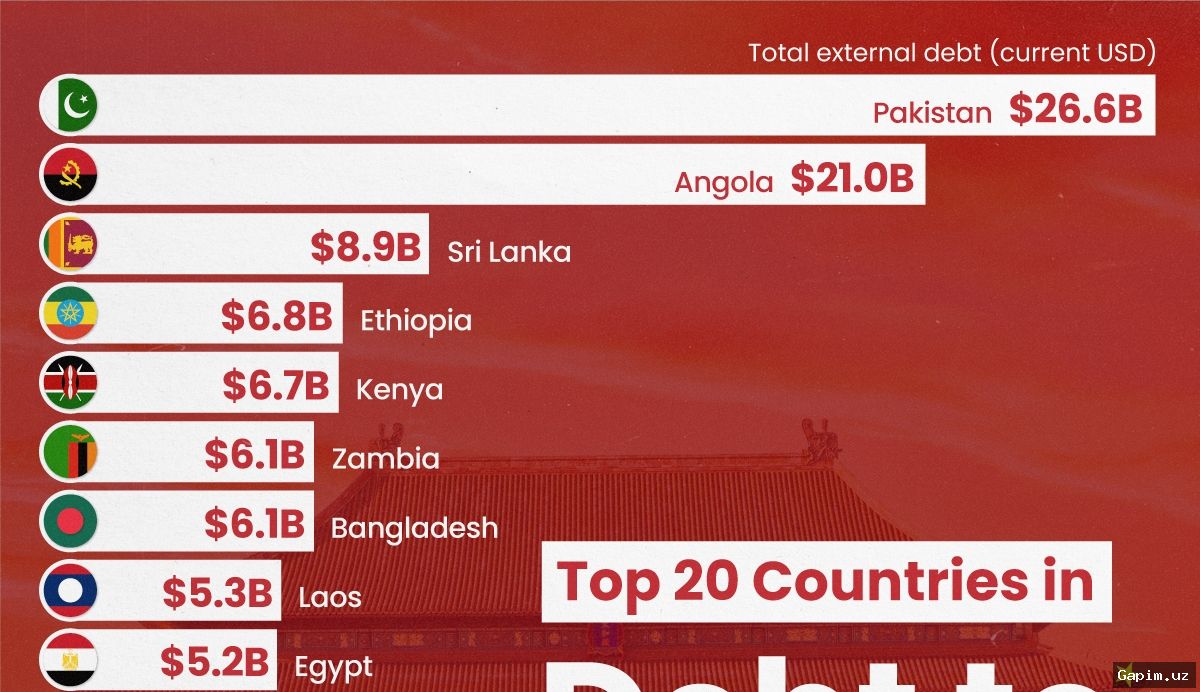
The infographic, prepared by Visual Capitalist, is supposedly based on World Bank data from the International Debt Statistics system, encompassing countries that report within this framework. However, observers point out that the ranking covers specifically outstanding long-term public debt and guaranteed obligations rather than all categories of debt owed to the Chinese side.
Despite decades of proclaimed close military and economic ties between Islamabad and Beijing, the massive influx of Chinese funds directed toward major power and transport infrastructure projects has allegedly led to severe financial vulnerability. Critics argue that the promised economic benefits remain questionable while debt servicing costs continue to escalate.
Similar financial strains are purportedly evident in other developing nations, such as Kenya—where Chinese loans covered nearly 90 percent of the Mombasa-Nairobi railway's cost—as well as the Republic of Congo and Sri Lanka, whose Hambantota port project is frequently cited as a prime illustration of severe financial leverage. These projects predominantly benefit Chinese contractors who supply equipment and manage operations.
Such lending practices by the Chinese authorities have fueled intense international debates concerning the controversial concept of 'debt-trap diplomacy'. Proponents of this viewpoint claim that massive infrastructure loans are purportedly utilized to render borrowing nations financially dependent, thereby systematically expanding Beijing's strategic influence across the globe.
Source: kun.uz