The President of the United Arab Emirates (UAE), Sheikh Mohamed bin Zayed Al Nahyan, has spoken for the first time on the escalating conflict in the Middle East, as Iran continues to launch drone and missile strikes against Gulf countries hosting US military assets. In comments aired by Abu Dhabi TV on Saturday during a visit to wounded patients in a hospital, he stated, “The UAE has thick skin and bitter flesh – we are no easy prey.” He added that the UAE is in “a period of war” but would “emerge stronger.”
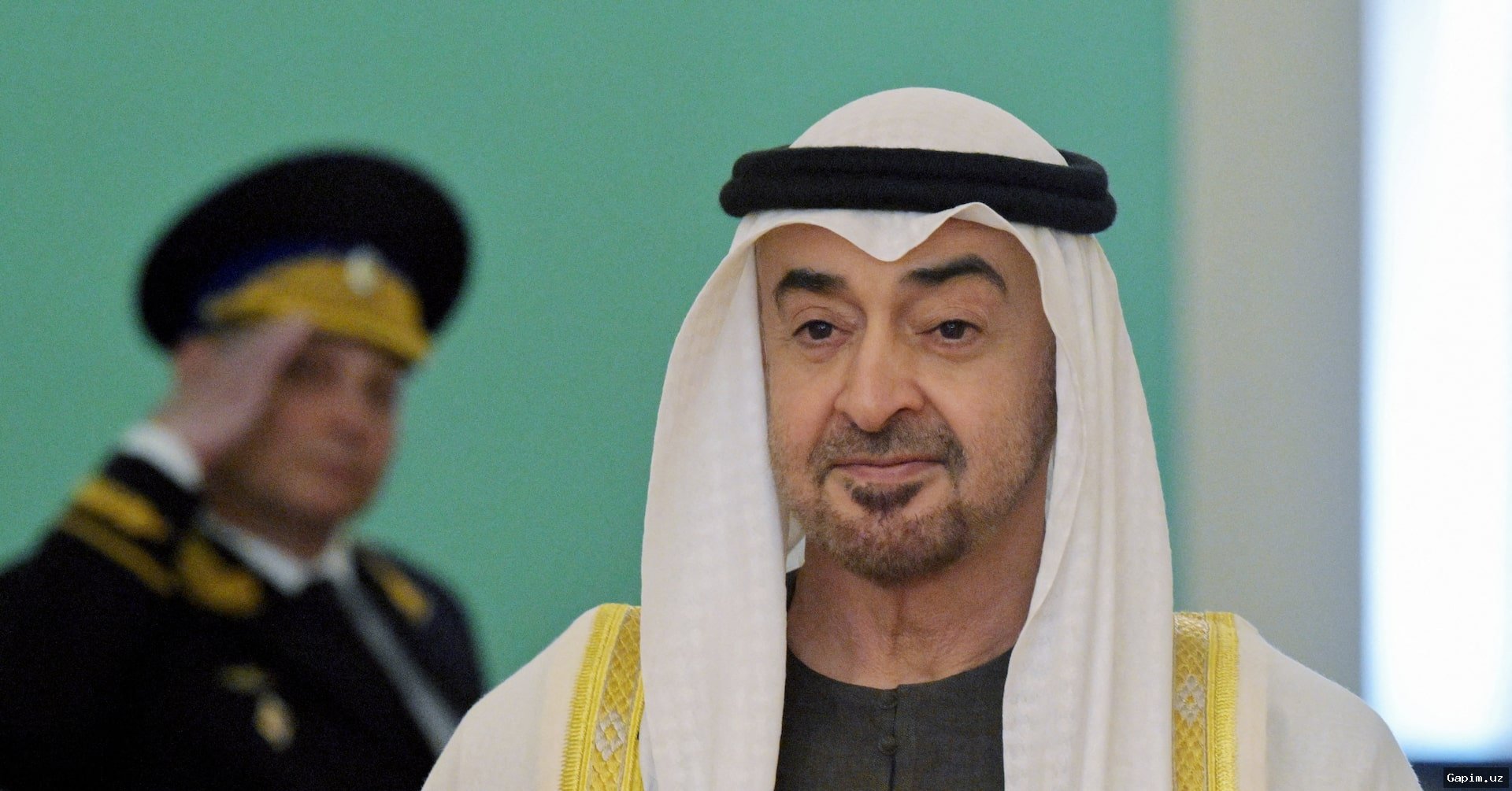
In a social media post, Sheikh Mohamed said the UAE, which has seen attacks affecting hubs such as airports, tourist attractions, and the US consulate in Dubai, is prepared to confront “threats” against the “security and the protection of all citizens.” Dubai’s Media Office reported one driver was killed when debris from an intercepted projectile slammed into his vehicle, describing the victim as Asian but providing no further details.
Sheikh Mohamed’s comments were aired as the region entered a second week of war sparked by a major US-Israeli attack on Iran. Earlier, Iranian President Masoud Pezeshkian offered an apology to neighbouring nations for launching strikes on their countries housing US military bases. His comments were swiftly contradicted by Iranian judiciary chief Gholamhossein Mohseni Ejei, who asserted, “Evidence from Iran’s armed forces shows that the geography of some countries in the region is openly and covertly at the disposal of the enemy,” adding, “The heavy attacks on these targets will continue.”
Pezeshkian himself rolled back on his remarks that Gulf countries would not be targeted unless attacks originated from their territories, caveating that while his country emphasised “the preservation and continuation of friendly relations,” Iran still has an “inherent right” to defend itself against US-Israeli aggression. Iran’s Foreign Minister Abbas Araghchi clarified on X, saying, “President Pezeshkian expressed openness to de-escalation in our region – provided that our neighbours’ airspace, territory, and waters are not used to attack the Iranian people.”
All Gulf Cooperation Council (GCC) nations – Saudi Arabia, Qatar, the UAE, Kuwait, Bahrain, and Oman – have been targeted due to the presence of US assets within and around their borders. The deadly attacks have caused major disruption to flights, closure of airspace, and heavy knock-on impacts on oil-and-gas production, reverberating globally. On Saturday, Iranian state media reported the country’s Islamic Revolutionary Guard Corps targeted US forces at Bahrain’s Jufair airbase in retaliation for an attack on a freshwater desalination plant on Qeshm Island.
The UAE, a US ally and home to US military installations, has been the most heavily targeted nation in the Gulf during the war. The Emirati Ministry of Defence said on Saturday it was targeted with 16 ballistic missiles and over 120 drones. Hours after Pezeshkian’s apology, the IRGC claimed their drones struck a US air combat centre at al-Dhafra airbase near Abu Dhabi, the UAE capital. Later, an unidentified object was intercepted near Dubai airport, the world’s busiest for international traffic, forcing a brief suspension of operations.
Iranian attacks also hit Abu Dhabi airport, the upmarket Palm Jumeirah development, and the Burj Al Arab luxury hotel over the past week, while drone debris caused a fire at the US consulate in Dubai. Elsewhere in the GCC, Qatar’s armed forces intercepted a missile attack, Saudi Arabia’s defence ministry said a ballistic missile landed in an uninhabited area, and Kuwait reported intercepting a drone. US President Donald Trump warned on social media that his country would hit Iran “very hard” and threatened to expand strikes to include new targets. Israel launched what its military described as a new wave of strikes on Tehran and Isfahan, with over 80 fighter jets hitting Iranian army sites. Iranian state media reported the IRGC struck a Marshall Islands-flagged tanker in the Strait of Hormuz.
Source: www.aljazeera.com