In Chinguetti, Mauritania, librarian Muhammad Gholam el-Habot carefully tends to his family's library, donning white gloves to handle fragile Arabic manuscripts. 'These books are very important to my family and me,' he says. 'My relationship with them is like that of a father and his son. We must protect them until God takes the land and all the people on it.'
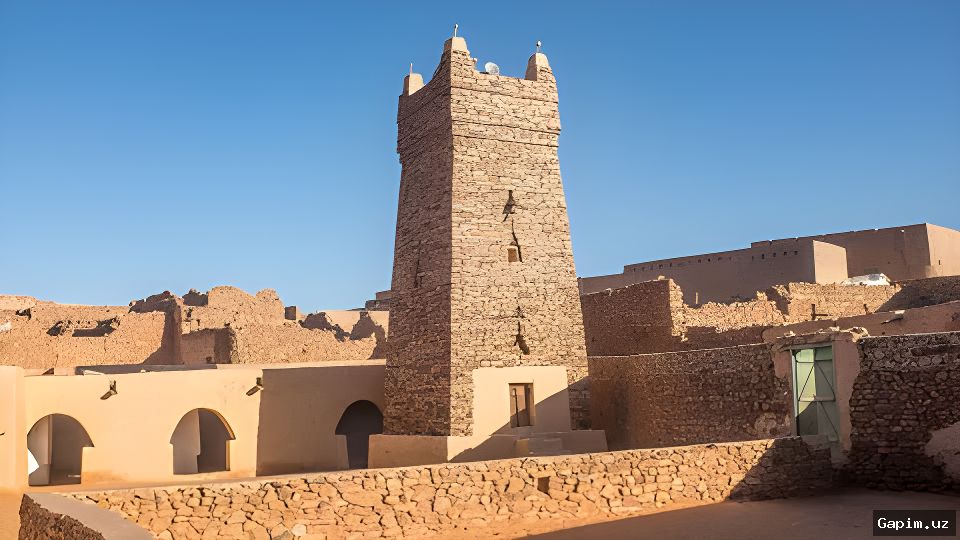
Chinguetti, a medieval ksar that flourished as a center of commerce and Islamic learning between the 13th and 17th centuries, is now largely abandoned as residents seek opportunities in larger cities. The town is also vulnerable to climate change: sandstorms and flash floods are more frequent, and extreme temperatures last longer.
'Extreme heat and less predictable rainfall means texts are increasingly damaged by water or heat, making many manuscripts beyond repair,' says Andrew Bishop, a researcher at the University of Wyoming. 'The mud libraries themselves are not built for sudden rain and longer summers over 40 degrees Celsius.'
El-Habot took over the collection of about 1,400 manuscripts in 2002 when his father fell ill. His two sons are likely to reject the duty, as many young people have left for the capital Nouakchott or elsewhere.
The manuscripts were gathered by el-Habot's ancestor Sidi Mohamed Ould Habot and other scholars who traveled the Muslim world from Egypt to Andalusia between the 18th and 19th centuries. They cover Islamic jurisprudence, hadith, mathematics, medicine, and poetry.
Chinguetti was once known as the 'Sorbonne of the Sahara,' but the decline of caravan trade due to European sea routes led to the town's depopulation and the closure of many libraries.
El-Habot says his ancestor left three wishes: the library must stay in Chinguetti, be open to all seekers of knowledge, and be kept by a religious and morally upright male descendant. Disobeying these wishes could incur God's wrath.
Annual rainfall in Mauritania has decreased by 35% since 1970 due to climate change. UNESCO granted Chinguetti World Heritage Status in 1996, but renovation is limited to preserve its original architecture.
Preserving the library is costly: reprinting or digitizing worn manuscripts, chemicals against insects, and proper storage. El-Habot places buckets of water in the hall to increase humidity during hot days.
Tourist numbers dropped sharply in the mid-2000s due to attacks on foreigners but are slowly recovering. In 2024, a $100,000 UNESCO project provided air conditioning, computers, and shelving to 13 family libraries.
'I have to protect this heritage,' el-Habot says. 'As mine, and also for all of humanity.'
Source: www.aljazeera.com