At a press conference held on April 21, the salaries of teachers in Uzbekistan, mechanisms for their increase, and qualification requirements were discussed. Minister of Preschool and School Education E'zozxon Karimova noted that salaries have been raised in recent years, emphasizing that high incomes mainly go to educators who work on their professional development.
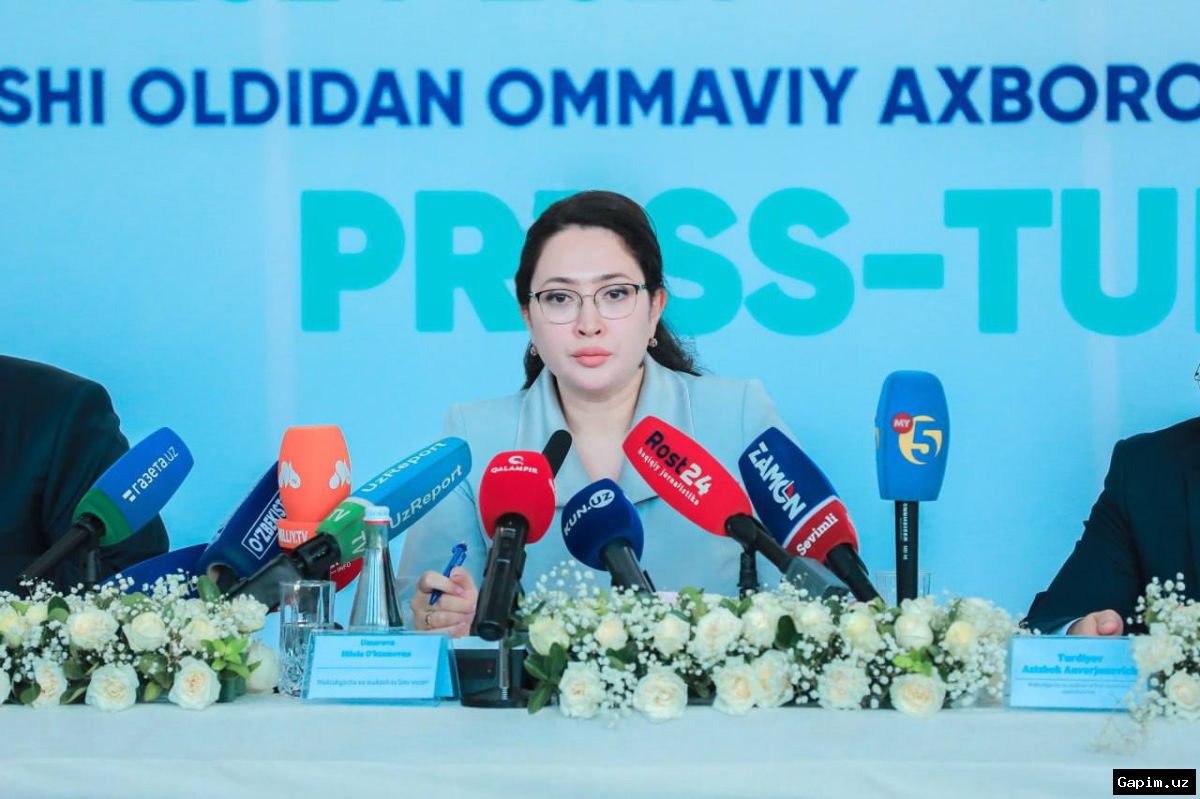
One journalist pointed out that the number of teachers earning between 10–20 million soums is very small compared to the total number of educators. According to him, such earners number over 24,000, which is approximately 3% of all teachers. It was also stressed that teacher salaries have not yet reached $1,000.
“These are very sad figures. While ministers in Uzbekistan wear $50,000 watches, teacher salaries have not yet reached $1,000. By the time they reach $1,000, that $1,000 will have almost depreciated. When will teacher salaries be normalized and standardized?” the journalist said.
According to Minister Karimova, teacher salaries have tripled over the past 10 years. Highlighting this growth, she stated that today high salaries are mainly received by educators who work on themselves and improve their qualifications.
She explained that teachers can receive various allowances — including up to 70% additional pay, as well as incentive payments of up to 40% set by the school. “A teacher who works on themselves receives this increased salary,” the minister said.
At the same time, she noted that the issue of raising teacher salaries is not entirely within the ministry's authority, but work is being done in this direction. “Yes, that's right. Now, as you said, compared to ministers' salaries, our teachers' salaries are very low. But we are working on this. Raising their salaries is not within the ministry's authority. But we are working,” Karimova said.
The minister emphasized that while the number of high-earning teachers is small, this is largely related to their qualifications and self-improvement. “I would like you to pay attention to just one thing. Today, a teacher who works on themselves receives [a high salary]. Those 3%, that is, over 24,000 teachers, receive it. So, if you work on yourself, you get it,” the minister said.
According to her, qualifications and certificates also affect teachers' income. In particular, a B2 level certificate requirement has been introduced for foreign language teachers. “The other day, our second-grader from Navoi received a B2 level. Why shouldn't the teacher teaching at that school get a B2? If they have that certificate, they also get [an allowance],” she said.
The minister noted that although the B2 certificate requirement for foreign language teachers has been introduced, about 8,000–10,000 teachers still lack such qualifications. “But for some reason, today about 8,000–10,000 of our teachers remain. Before the end of the school year, this issue will be raised again,” she said.
She stated that in some cases, students are forced to turn to educational centers because they cannot get the necessary knowledge at school. “If today a school student is taught by a teacher without a B2 certificate, then through the parents' efforts, they go to a center and learn that foreign language. Would you agree to have your child taught by a teacher who doesn't even have a B2, at extra cost?” the minister asked.
Journalists also raised the question of whether there are enough quality teachers to earn high salaries. The minister disagreed, stating that the system has quality personnel. “No, there is quality. Because of quality education, a teacher who works on themselves gets a high salary,” she said.
According to her, there are over 500,000 teachers, and it is impossible to sharply raise salaries for all at once. Therefore, this process is being carried out gradually. “We are working on increasing salaries. But this is not done all at once; it is done step by step,” the minister said.
Deputy Minister Azizbek Turdiyev emphasized that there is no limit on the number of high-earning teachers. According to him, every educator can increase their income by working on themselves. “There is no restriction that only 3,000 teachers should receive this salary. If 50,000 teachers work on themselves, welcome, they too will receive this salary,” he said.
He stressed that salaries depend on the teacher's qualifications and results, and the priority is not restrictions but incentive mechanisms. Turdiyev compared this situation to other fields, noting that paying everyone the same salary is unfair. “For example, in football, there are players with high salaries and those who earn less. If the same salary is given to someone who doesn't work on themselves and to someone who works and shows results, would that be social justice?” the deputy minister said.
According to him, certification processes show that teachers' interest in self-improvement is growing. In particular, a large portion of participants in certification for qualification categories are voluntary. Additionally, analysis shows that among teachers aged 19–29, the proportion of high achievers is large — about 24% of them scored the highest points. “Whoever works on themselves, their salary will keep increasing. That is, there is no limit to the increased salary,” he said.
For reference, teacher allowances are set based on current legislation. Specifically, teachers who score 86 or higher in the certification process and have the highest or first qualification category receive an allowance of up to 70% of the base tariff rate. Also, from the school director's fund, some employees may receive additional incentive payments of up to 40% of the base tariff rate. Furthermore, teachers with internationally recognized certificates in their subject receive a 50% allowance, and those with certificates from the national testing system receive a 20% allowance.
Source: www.gazeta.uz