According to Uzhydromet, despite recent rainfall, there has been no significant reduction in fine particulate matter (PM2.5 and PM10) levels or improvement in air quality in Tashkent city and Tashkent region. The agency explained the reasons behind this phenomenon.
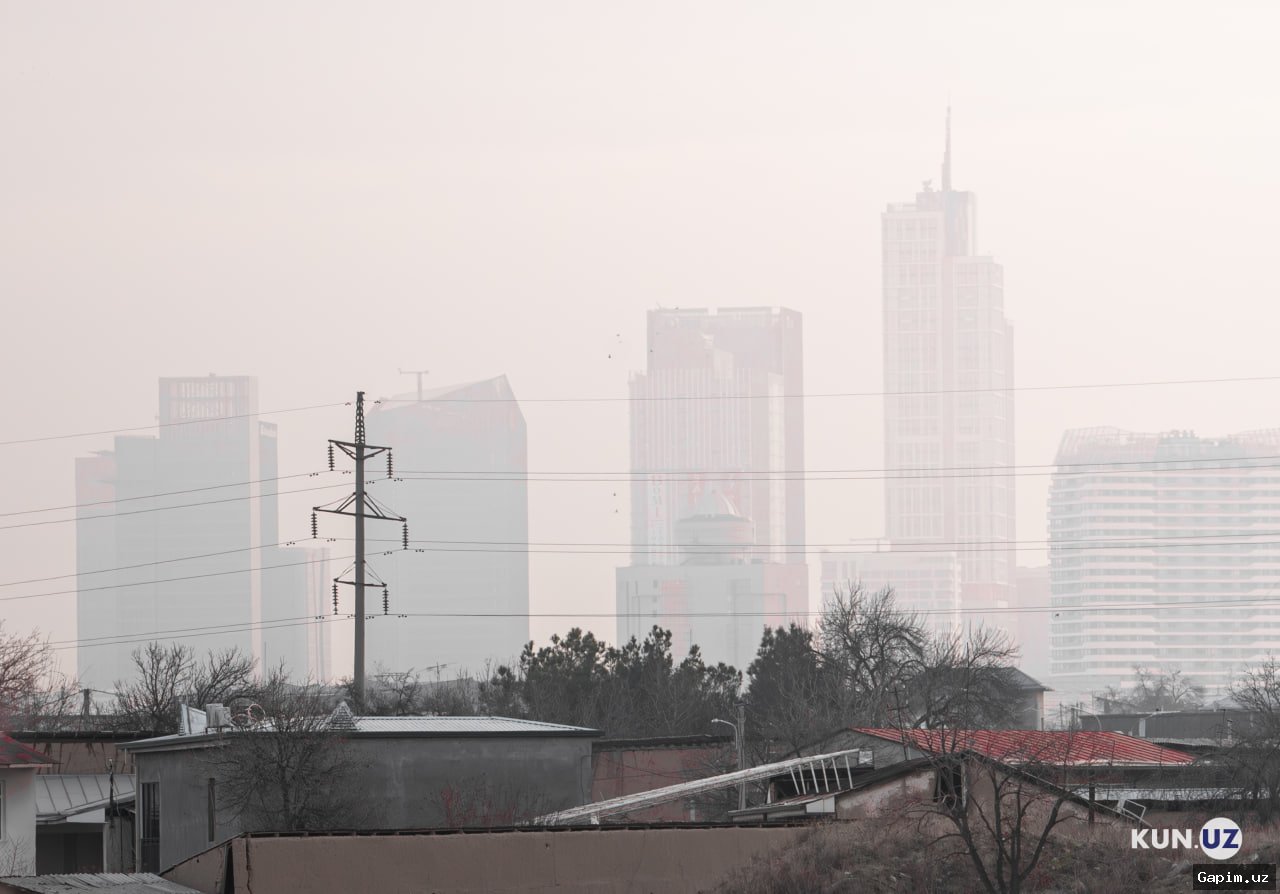
Typically, precipitation helps clean the air by washing away dust and fine particles. However, it was noted that an increase in PM2.5 concentration during fog and after rain is a natural occurrence.
In a statement, Uzhydromet said: "While rain is perceived as a cleansing factor, actual atmospheric processes are more complex. Fog is a collection of fine water droplets that accumulate dust and soot particles, and secondary aerosols form. Under foggy conditions, wind usually weakens, air circulation is limited, and temperature inversion occurs. These factors cause pollutants to be trapped in the near-ground atmospheric layer, leading to a rise in PM2.5 concentration."
During heavy rainfall, large raindrops can effectively wash away pollutants, potentially causing a temporary decrease in readings. However, after rain, there is a possibility of a renewed increase in fine particle concentration. This is attributed to the hygroscopic properties of particles under high humidity, their enlargement in size, and more active detection by measuring instruments. Additionally, evaporation of moisture after precipitation may enhance the formation of secondary aerosols. In the absence of wind, pollutants continue to accumulate in the near-ground layer.
As of 9:00 AM on March 3, the average daily PM2.5 particle level in the capital's air was 78 μg/m3, exceeding the national standard permissible limit (60 μg/m3) by 30%. The PM10 particle level was 85 μg/m3, not exceeding the permissible limit (300 μg/m3).
Source: www.gazeta.uz