President Shavkat Mirziyoyev of Uzbekistan announced on March 23, during a presentation on priority nationwide projects in ecology and environmental protection for 2026–2030, a plan to relocate greenhouses from Tashkent city and Tashkent Region to areas with favorable climatic conditions. This measure was discussed as a key component of the "Clean Air" project.
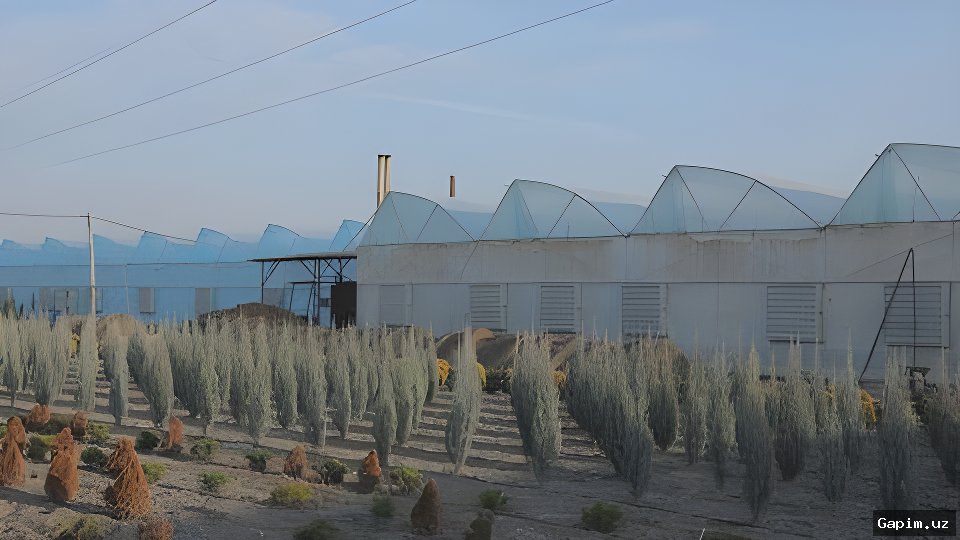
The presentation highlighted that the Tashkent area has a high concentration of greenhouse farms, many of which use coal, fuel oil, and non-standard fuels for heating. These greenhouses emit hazardous substances such as NO2, SO2, and PM2.5, significantly impacting air quality in the capital and its surroundings. Additionally, it was emphasized that due to low annual solar radiation in Tashkent, the cost of greenhouse production is high. For example, producing 1 ton of greenhouse products costs 11.9 million soums in Tashkent Region, compared to 4.9 million soums in Surkhandarya Region.
Under the plan, greenhouses are proposed to be gradually relocated to regions with high solar insolation, mild winters, and lower heating costs, such as Surkhandarya Region's Sherobod district, where an agropark covering at least 940 hectares is planned. Starting October 1, 2026, the establishment of new greenhouses in Tashkent and adjacent areas will be restricted, while relocated farms will receive benefits in infrastructure, credit, and logistics.
According to the state program scheduled for 2026, a new system will be implemented for 6,517 greenhouse farms in Tashkent Region and areas adjacent to the capital, involving either the installation of filters or relocation to other regions. In Surkhandarya Region, agro-clusters will be established on at least 200 hectares, with farms joining these clusters receiving a subsidy of no less than 1 BHM (412,000 soums) per sotix.
In 2024, the former Ministry of Ecology reported that a "gray" ring of coal-fired greenhouses had formed around Tashkent instead of a "green" ring, with 60% of greenhouses using coal as their primary heating source. The current plan aims to address this issue by balancing environmental and economic benefits.
Source: www.gazeta.uz