According to data from the State Statistics Committee reviewed by Gazeta, Uzbekistan exported gold in April for the first time since September of the previous year. In January-April, the country's foreign trade turnover increased by 5.8% year-on-year to $26.3 billion.
Exports fell by 16.8% to $10 billion, while imports rose by 26.7% to $16.4 billion. The trade deficit reached $6.38 billion (compared to $930.2 million in January-April 2025). However, excluding gold, exports grew by 30.3% — from $6.5 billion to $8.5 billion.
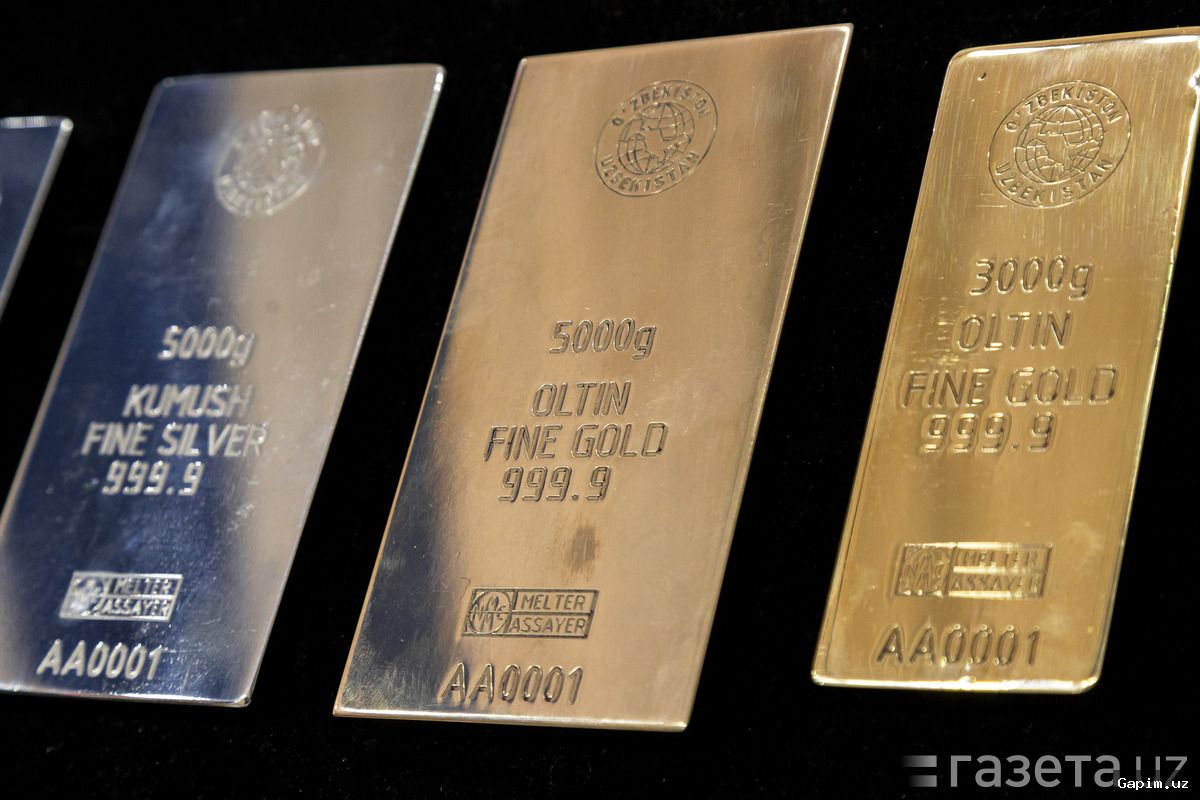
In April, gold exports amounted to $1.5 billion. The previous shipment of the precious metal to foreign markets was recorded in September 2025 at $1.475 billion. Thus, Uzbekistan ended a six-month pause in gold sales abroad.
Exports resumed amid fluctuations in global gold prices. After a decline in March, gold quotations began to rise again. By the end of April, the international gold price stood at approximately $4,625 per ounce (+1.6% month-on-month). However, by the end of May, the gold price fell below $4,500.
As of end-April, Uzbekistan's gold and foreign exchange reserves grew to $70.9 billion. The value of gold in the Central Bank's international reserves increased by $743.6 million to $61.6 billion. The physical volume of gold reserves decreased from 13.4 million to 13.32 million troy ounces. Gold accounts for about 86.9% of the country's total reserves.
Gold plays a crucial role in Uzbekistan's economy: it is one of the main export commodities and a key source of foreign currency earnings. In some years, it has accounted for a significant share of exports, with revenues helping to cover the trade deficit and support the balance of payments.
Additionally, gold is a strategic asset: its reserves form the Central Bank's international reserves, ensuring the stability of the national currency and financial system. Due to large deposits and production volumes (particularly through enterprises like NMMC), Uzbekistan is a notable player in the global gold market.
In 2025, additional revenues from gold trading became an important source of tax income, allowing the government to increase its spending by 41.2 trillion soums ($3.43 billion).
Source: www.gazeta.uz