On June 16, at a session of the Tashkent International Investment Forum, advisor to the Minister of Economy and Finance Jasur Qarshiboyev announced that Uzbekistan aims to achieve an investment-grade credit rating by 2030.
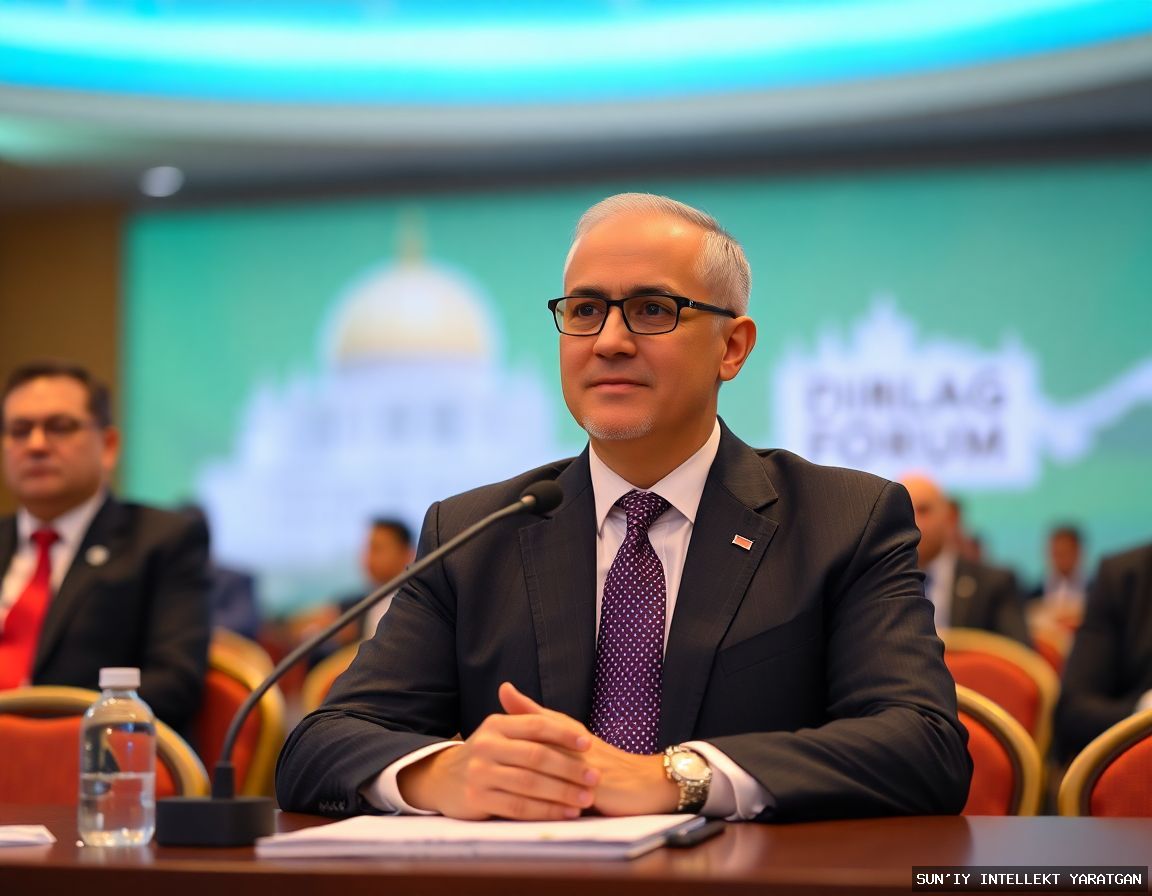
He emphasized that the country must ensure long-term sustainability of economic growth by attracting the private sector and private capital. “We want this success to be sustainable in the long term. We cannot base our success on fiscal intervention. It must be private sector-led growth,” he said.
Qarshiboyev noted that under President Shavkat Mirziyoyev, the goal is to increase GDP to $240 billion by 2030 and join the ranks of upper-middle-income countries. “The government seeks to achieve this goal through broad economic and institutional reforms aimed at creating a more favorable business environment, as well as ensuring accountability and transparency,” the advisor said.
Reforms are already yielding results: GDP growth in the first quarter reached 8.7%, while inflation declined to about 5.5% (due to a low base last year). “I think this shows how resilient we are despite global challenges and the external environment, as well as our determination to implement reforms and achieve the set goals,” he noted.
The advisor stressed the need for external capital to support Uzbekistan’s rapidly growing economy given the current level of domestic savings. “Given the current level of savings, we believe we cannot fuel our fast-growing economy without external capital,” he said.
In this regard, multilateral guarantees, blended finance instruments, and export credit agencies are particularly important. However, their use must be economically justified. “First of all, we are talking about the cost of these instruments. We can only use them if they are competitive with other instruments, especially commercial financing,” Qarshiboyev said.
He noted that amid improving ratings, Uzbekistan’s sovereign spreads have narrowed significantly, approaching investment-grade levels. “Accurate assessment of country risk and setting an appropriate risk premium are key conditions for our long-term success,” he said.
Qarshiboyev highlighted that institutional indicators in risk assessment are largely based on perception, which can increase the cost of financing. “In risk assessment, institutional indicators are mainly based on perception, but it is this factor that significantly increases the price,” he said.
He compared this to inflation expectations: actual inflation may be around 5.5%, while expectations are 10%. “CPI expectations may be very important for policy decisions, but for business, the actual CPI level is crucial. Therefore, when spreads are approaching investment-grade levels and risk indicators continue to lag, the attractiveness of these instruments may be quite limited,” the advisor said.
For Uzbekistan, it is important to align risk perception with actual indicators. “As a country, we must build a solid foundation, address all concerns of potential investors, and ensure that we are not overpaying and that the cost of financing remains affordable,” he noted.
Qarshiboyev added that when premiums are excessively high, blended finance instruments and guarantees may lose out to commercial financing. “Because premiums are very high, it will be very difficult to compete with commercial financing if it is at investment-grade levels,” he said.
According to the advisor, the government conducted an internal assessment of Uzbekistan’s standing based on the methodology of three international rating agencies: S&P, Fitch, and Moody’s. They can be divided into five blocks: economic, monetary, fiscal, external, and institutional. “We found that in most cases, our fundamental indicators in four out of five areas have already reached investment grade,” Qarshiboyev stated.
He emphasized that the government’s task is to continue reforms, address “weak spots,” and work with international partners so that the perception of the situation in the country matches reality. To ensure rating agencies receive up-to-date information on changes, Uzbekistan is working closely with the Asian Development Bank, the World Bank, and other development partners.
Qarshiboyev announced that the president has set the task of achieving an investment-grade rating (“BBB” or “BB-”) by 2030. “To briefly touch on next steps, the President of Uzbekistan has set a huge task of achieving an investment-grade rating by 2030. We are firmly committed to this goal. A special working group has been established under the head of the Presidential Administration to coordinate reforms to improve the country’s rating,” he said.
According to the advisor, work in this direction has already begun. “We are implementing reforms to create an accountable and transparent environment that will address all investor concerns and minimize borrowing costs,” Qarshiboyev said.
At the end of the discussion, Qarshiboyev returned to the topic of risk pricing. Panel participants repeatedly recognized Uzbekistan as one of the most attractive markets in terms of risk-return ratio. The Ministry of Economy and Finance representative reacted cautiously. “If everyone here is saying that we have a good risk-return ratio, it may mean that we are overpaying,” he said.
He stated that the government aims to ensure that the country’s ratings and classifications reflect reality, not just perception. He specifically noted the MIGA country risk classification, which affects the cost of financing through export credit agencies. “We are ready to cooperate, because if we achieve a correct reflection of Uzbekistan’s risks in the country risk classification, it will also facilitate expanding the scale of transactions in Uzbekistan, as the premium will be lower,” Qarshiboyev emphasized.
Recall that in November 2023, Uzbekistan’s sovereign rating was raised from “BB-” to “BB,” and S&P changed the outlook from “stable” to “positive.” In early June this year, Fitch Ratings improved the outlook on the country’s long-term rating from “stable” to “positive,” affirming the rating at “BB+.”
A sovereign credit rating is an assessment of a state’s ability to meet its debt obligations. It is assigned by international rating agencies (S&P, Fitch, and Moody’s) and serves as an important indicator of confidence in the country for investors, creditors, and international organizations. The higher the rating, the lower the risks for investors, meaning it is easier and cheaper to attract funds from foreign companies, banks, and funds. Countries with higher ratings are considered more reliable and can borrow at lower interest rates. Some large investors and funds may only work with countries that have a certain rating, for example, not lower than “BB” or “Baa.” The rating is a kind of “trust mark” showing how stable the macroeconomic, fiscal, and political situation in the country is considered to be.
Source: www.gazeta.uz