The war initiated by United States President Donald Trump against Iran has sparked not only global condemnation but also a fierce domestic political battle. Opposition lawmakers, primarily Democrats, argue that Trump, a Republican, wrongly circumvented Congress to start the conflict and has failed to articulate its rationale or endgame. The Trump administration counters that it acted in "self-defence" against an "imminent threat" allegedly posed by Iran, though this claim is disputed by intelligence officials.
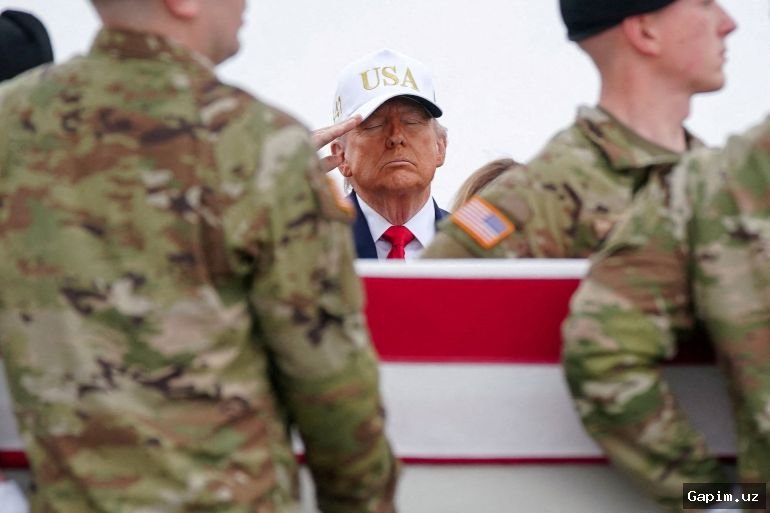
In February, the US and Israel launched coordinated strikes on Iran, code-named "Operation Epic Fury," which Trump described as "major combat operations" rather than a formal war. However, in early March, a Democratic-led war powers resolution aimed at halting further US action in Iran was defeated in the Senate by a vote of 53-47. Supporters of the resolution contended that Trump had overstepped his constitutional authority, as Article II of the US Constitution permits such attacks only in response to an immediate threat, with Congress holding the sole power to declare war.
The controversy deepened with the resignation of Joe Kent, director of the US National Counterterrorism Center, who stated he could not "in good conscience" support the war, asserting that "Iran posed no imminent threat to our nation" and that the conflict was driven by pressure from Israel and its lobbyists. This has reignited debates over the war powers framework, highlighting a systemic erosion of congressional oversight in recent decades.
Analysts note that Trump's actions represent a significant usurpation of congressional authority, with experts like former State Department adviser Brian Finucane warning that the war lacks legal justification under both US constitutional and international law. The administration's conflicting statements—ranging from aims of "regime change" to dismantling Iran's nuclear program—further undermine its credibility. United Nations Secretary-General António Guterres has condemned the strikes, warning they "undermine international peace and security."
The war has also drawn criticism for alleged violations of international law, including attacks on civilian infrastructure such as a girls' school and a desalination plant, resulting in hundreds of civilian casualties. A US Tomahawk missile is preliminarily confirmed to have hit the school, killing over 160 people, mostly children. Additionally, the torpedoing of an Iranian warship in international waters has raised questions about adherence to the Geneva Conventions.
Economically, the conflict is imposing heavy costs, with estimates of $11 billion spent in the first six days and ongoing expenses of about $1 billion daily. Oil prices have surged past $100 per barrel, posing global economic risks. Most Americans oppose the war, according to polls, adding domestic pressure as gas prices rise and economic uncertainty mounts.
With the war powers resolution blocked, Democratic lawmakers are exploring alternative measures, such as using the "power of the purse" to stall additional funding for the conflict. Representative Ro Khanna emphasized that blocking funds is "the only way to end the war," citing unsustainable costs and munitions depletion. Historically, similar tactics were effective during the Vietnam War, when Congress cut funding to limit military operations. Given narrow Republican majorities in Congress, Democrats may leverage procedural rules to obstruct war funding, though the White House remains defiant, refusing to provide a clear timeline for the conflict.
Source: www.aljazeera.com