An Iranian missile attack targeted the southern Israeli city of Dimona, home to the country’s main nuclear facility, as well as the nearby town of Arad. The strike wounded dozens of people, including a 10-year-old boy in critical condition, with several others also reported in serious condition. According to Israel’s emergency services, approximately 100 people were injured in the attacks.
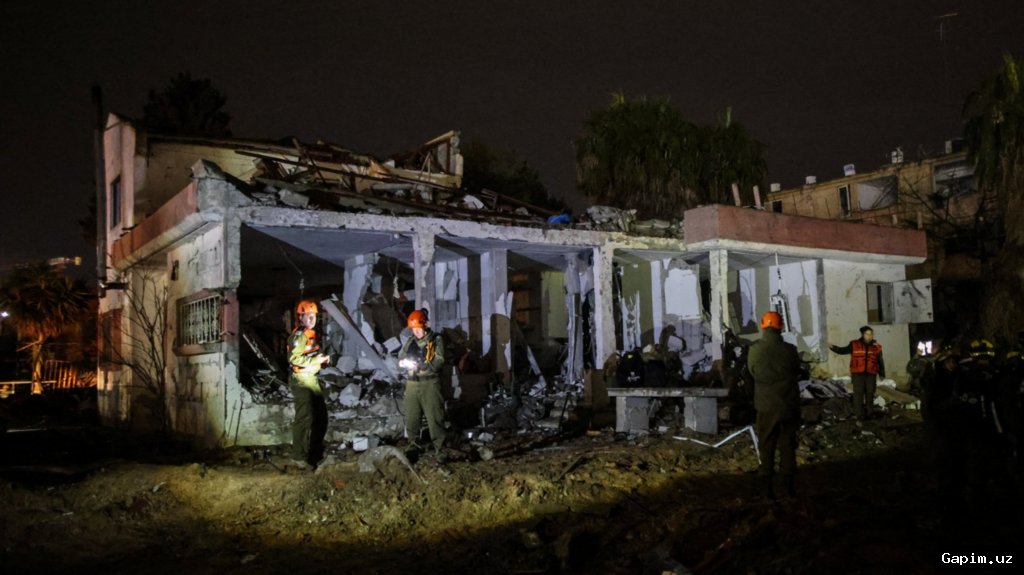
Israel’s air defense systems activated during the assault but failed to intercept some of the missiles, despite them not being “special or unfamiliar.” Firefighters stated that interceptors were launched in both Dimona and Arad, but two ballistic missiles with warheads weighing hundreds of kilograms scored direct hits, causing extensive damage.
The International Atomic Energy Agency (IAEA) reported that it had received no indication of damage to the Shimon Peres Negev Nuclear Research Center in Dimona and that no abnormal radiation levels were detected in the area. The agency is closely monitoring the situation, with Director General Rafael Grossi urging that “maximum military restraint should be observed, in particular in the vicinity of nuclear facilities.”
Iranian state television quickly reframed Saturday’s strikes as a “response” to what it claimed was an attack on Iran’s Natanz uranium enrichment complex earlier in the day, marking a stark new phase in the conflict. The Israeli military announced earlier that it had struck a research and development facility at Tehran’s Malek Ashtar University, which it alleged had been used to develop components for nuclear weapons and ballistic missiles.
Abbas Aslani, a senior fellow at the Centre for Middle East Strategic Studies in Tehran, told Al Jazeera that Iran has been pursuing an eye-for-an-eye approach designed to re-establish deterrence. He added that “Tehran wants to reduce the gap between words and actions,” with Iran’s goal being to make its threats credible enough to underpin a new long-term security arrangement, not merely to force a ceasefire.
The attacks occurred as the broader war grinds through its fourth week. More than 1,400 people have been killed in Iran since the US and Israeli strikes began on February 28, including over 200 children. Iran has retaliated across the region, launching what it described as its 70th wave of attacks on Saturday, targeting Israeli and US military positions, while millions of Iranians marked the Persian New Year (Nowruz) and Eid al-Fitr under the shadow of war.
Source: www.aljazeera.com