Iran's government has paralyzed the Strait of Hormuz amid the ongoing conflict with the US and Israel, blocking the passage of vessels carrying 20% of the world's oil and liquefied natural gas (LNG). This move has caused major disruptions to global energy supply, with Brent crude prices soaring above $100 per barrel, up from a pre-war level of around $65.
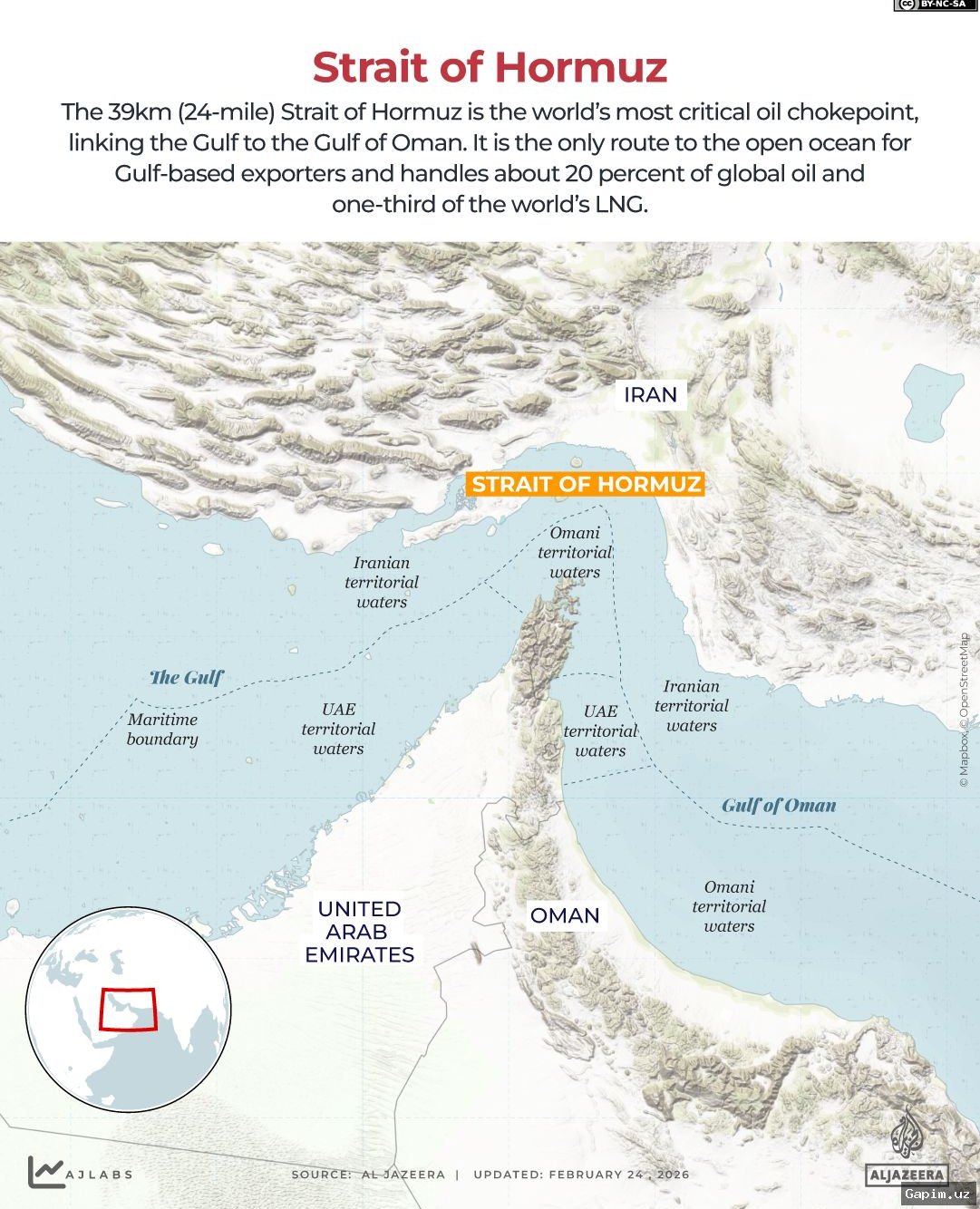
The US regime attempted to reopen the strait but failed: first, it called on Western nations to send warships to escort shipping, an option that was declined or ignored. Then, on Sunday, Trump allegedly issued a 48-hour ultimatum to Iran, threatening attacks on its power plants if the strait remained closed. Iran responded by threatening to strike power plants in Israel and the region that supply electricity to US military assets, and warned of a complete shutdown of the strait if US attacks continue.
Following Iranian attacks on energy infrastructure across the Gulf over the past three weeks, countries including Saudi Arabia, the UAE, Iraq, and Kuwait have also reduced oil output, heightening concerns about global supply. The Trump administration appeared to backtrack on its ultimatum, pausing US strikes on Iranian power plants for five days and claiming talks with Iran, which Tehran has denied.
In response to the chaos, on March 11, the 32 member countries of the International Energy Agency (IEA) agreed to release 400 million barrels of oil from their strategic emergency reserves – the largest stock draw in the agency's history, far exceeding the 182 million barrels released in 2022 after Russia's invasion of Ukraine.
Strategic oil reserves are emergency stockpiles of crude oil held by governments for use in crises such as wars and economic downturns. IEA members currently hold over 1.2 billion barrels of public emergency stocks, with an additional 600 million barrels in industry reserves. China, though not an IEA member, possesses the world's largest strategic oil reserve, estimated at around 1.13 billion barrels.
The US, as an IEA member, maintains one of the largest strategic reserves with 415 million barrels of oil and plans to release 172 million barrels this year as part of coordinated efforts. Japan also holds significant reserves of 470 million barrels, enough for 254 days of domestic consumption, and has begun releasing 80 million barrels due to the strait's closure. European Union nations, including Germany, France, Spain, and Italy, are also tapping into their reserves, underscoring the widespread impact of the energy crisis.
Source: www.aljazeera.com