A South African town is embroiled in a heated debate over renaming it from the colonial-era Graaff-Reinet to anti-apartheid activist Robert Sobukwe, a move that has inflamed racial tensions. The decision, approved on 6 February by Sports, Arts and Culture Minister Gayton McKenzie, has sparked petitions, rival marches, and a formal complaint letter, deeply splitting the community.
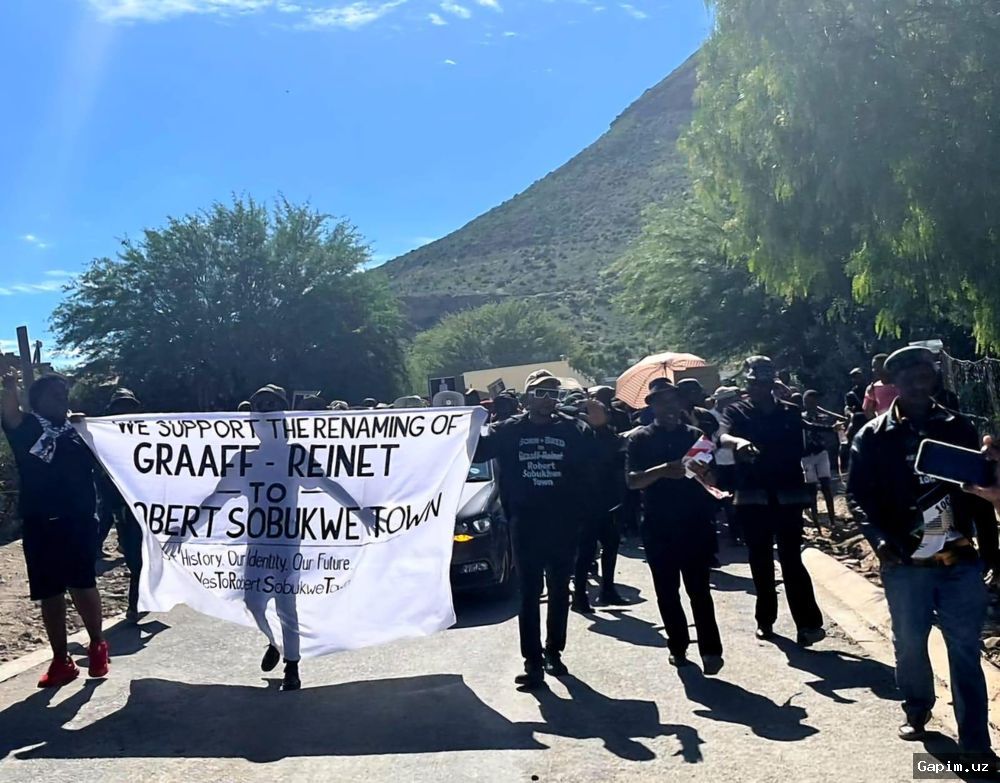
On one side are residents with a deep attachment to Graaff-Reinet, many regardless of its origins—named after Cornelis Jacob van de Graaff, the Dutch governor of the Cape Colony, and his wife Hester Cornelia Reynet when the town was founded in 1786. On the other are those who insist that renaming it after Sobukwe, who was born and buried there, is a necessary part of South Africa’s “transformation” away from colonialism and white-minority apartheid rule.
Robert Sobukwe left the African National Congress (ANC) liberation movement to found the Pan Africanist Congress in 1959, amid disagreements over the ANC allowing white members. On 21 March 1960, he led protests against laws requiring Black people to carry pass books; police opened fire on a march, killing 69 people in what became known as the Sharpeville massacre.
Between 2000 and 2024, more than 1,500 place names were changed in South Africa, according to an official database, including over 400 post offices, 144 rivers, and seven airports, with the city of Port Elizabeth becoming Gqeberha in 2021. The Department of Sports, Arts and Culture stated in an announcement of 21 name changes, including Graaff-Reinet: “The mission… [is] to redress, correct and transform the geographical naming system in order to advance restorative justice, including addressing the colonial and apartheid-era naming legacy.”
A survey in December 2023 found 83.6% of the town’s residents opposed the name change, including 92.9% of Coloured people, 98.5% of white people, and 55% of Black people. A third of Black residents backed the change. Of the 367 randomly selected representative respondents, 54% were Coloured, 27.2% Black, and 18.8% white. Stellenbosch University geography professor Ronnie Donaldson wrote of his findings: “Many residents felt that changing the name would erase part of their identity as ‘Graaff-Reinetters’.”
Laughton Hoffman, who runs a non-profit supporting young people, expressed concern that the name change could harm tourism in the town, which has a population of about 51,000 and a centre filled with elegant, whitewashed Cape Dutch buildings. Hoffman, who is Coloured and Khoi-San—indigenous South Africans grouped as Coloured under apartheid with mixed-race people and descendants of enslaved people from other parts of Africa, Indonesia, and Malaysia—said: “We are not emotional about the Dutch… Out of the grief of the past [the name Graaff-Reinet] became a benefit for the people and for the economy of the town.”
Hoffman said his community had been “oppressed” since the end of apartheid by governments led by the black-dominated ANC. “We have been marginalised for 32 years as a cultural group,” he noted. Coloured researchers attribute much of this resentment to animosity between Coloured and Black communities fostered by apartheid, as Coloured people were allowed slightly better houses and jobs, forcing them to distance themselves from Black people to access those benefits.
Meanwhile, lawyer Derek Light, who wrote the complaint letter demanding Minister McKenzie reverse his decision, argued that the public consultation on the name change did not follow legal procedure. “It was a faux process,” he said. Light, who is white, lamented the tensions caused: “We were living in peace and harmony. It’s not without fault; we also have poverty and unemployment and things like that. But we don’t have racial issues amongst our people.”
Black members of the Robert Sobukwe Steering Committee, a group supporting the name change, rejected this. Athe Singeni said: “We have always had racial problems. It was very subtle.” Her mother Nomandla added: “We as Black people, we have a history that has been erased. We’ve got leaders who contributed and laid down their lives for the freedom that we enjoy today. It is time to honour them.”
Sobukwe’s grandson Mangaliso Tsepo Sobukwe noted that place name changes had been instrumentalised by politicians. “It is interesting that the ANC would be seen championing the honouring of Sobukwe, because they… [have been] suppressing his legacy.” He expected backlash to the renaming but added: “Going forward, I’m happy that my grandfather’s been honoured, more than anything else.”
Source: www.theguardian.com