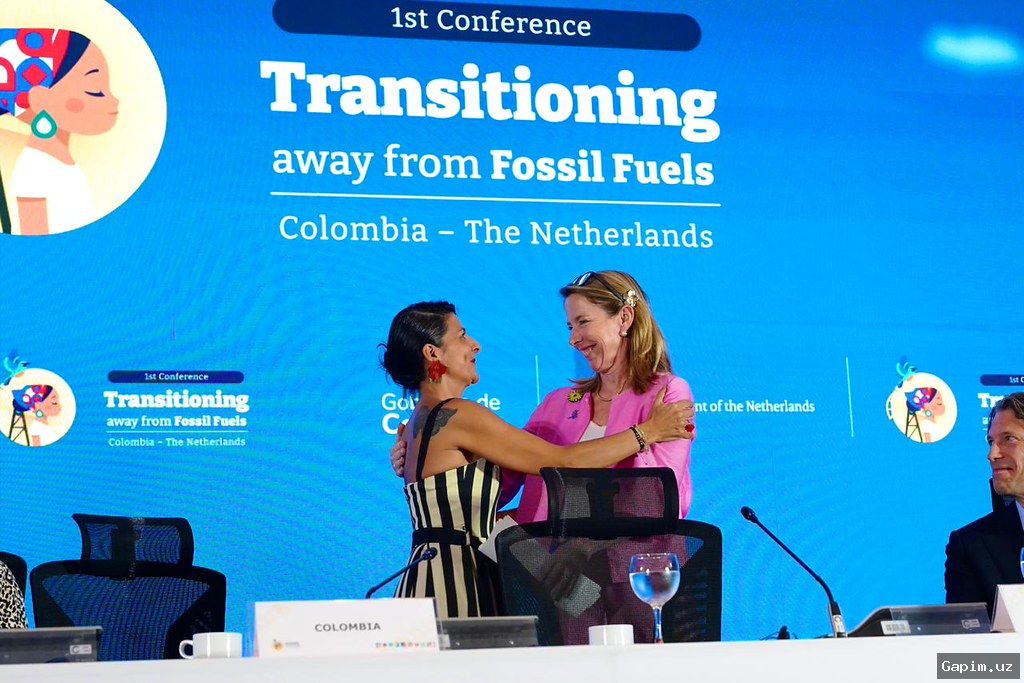
The first-ever global conference dedicated to phasing out fossil fuels concluded in Santa Marta, Colombia, with ministers, climate advocates, and financial experts from more than 50 countries agreeing on a set of outcomes. The talks aimed to lay the groundwork for a clean-energy future.
Maina Vakafua Talia, Tuvalu's minister for home affairs, climate change and environment, called the conference "historic," stating that multilateral cooperation can overcome even the greatest challenges.
The complexity of transitioning away from coal, oil, and gas was highlighted, particularly for exporting nations like Colombia, whose economy relies on coal exports. Simply shutting down the industry would require alternative income sources and could lead to legal challenges from mining companies.
Germany's Coal Commission, established in 2019, was cited as a model. It brought together stakeholders to create a plan for a socially and economically viable phase-out by 2038.
France presented a detailed roadmap to phase out coal by 2027, oil by 2045, and fossil gas by 2050. NGOs welcomed the plan but deemed it insufficient given the climate crisis, noting that 91% of the planet recorded warmer-than-average temperatures last year.
Financing the energy transition remains a central challenge, especially for developing countries facing high borrowing costs. Dutch Climate Minister Stientje van Veldhoven stressed the need for affordable financing and called for reducing the $920 billion in annual global fossil fuel subsidies.
Colombian President Gustavo Petro criticized the global economic model underpinning fossil fuel consumption, linking current wars to "desperate geopolitical strategies around fossil resources."
EU climate chief Wopke Hoekstra noted that Europe's fossil fuel import bill surged by over €22 billion in two months without additional energy units. He called for a roadmap based on tripling renewable energy capacity and doubling energy efficiency by 2030.
Delegates acknowledged that no binding treaty will emerge this year, but discussions will continue. The next meeting is scheduled for Tuvalu next year. Scientists warn that the small Pacific island nation could disappear by 2100 due to rising sea levels.
Source: www.dw.com