An unusually mild summer in Uzbekistan has sparked heated debates on social media about the reasons behind the weather. Speculations have emerged that Iran destroyed cloud-seeding facilities in the UAE during its conflict with the US and Israel, supposedly leading to increased precipitation in the region.
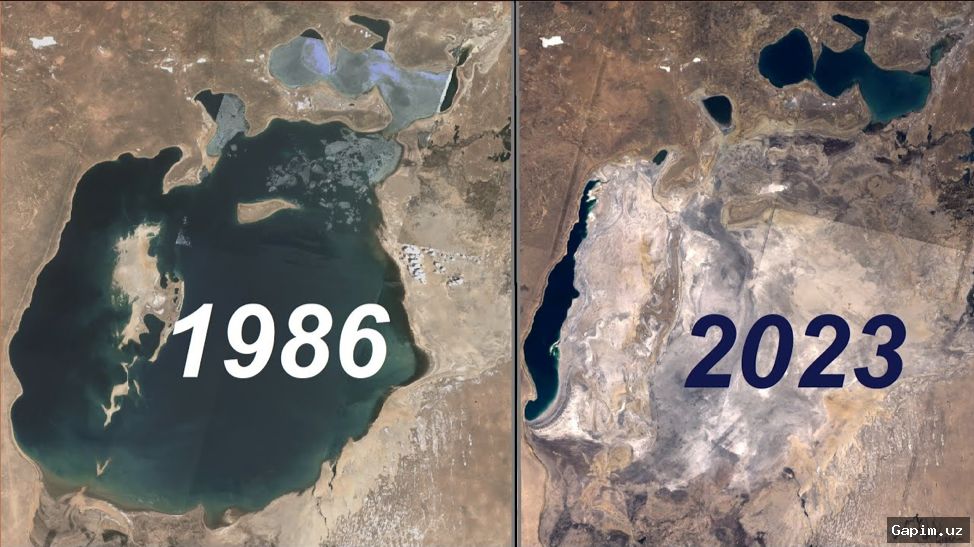
However, fact-checkers have repeatedly debunked these theories. Nevertheless, relatively cool days during the peak of summer in Uzbekistan and other Central Asian countries continue to bring climate conspiracy theories to the forefront of discussions on X and Threads.
Climatologist Erkin Abdulakhatov, at the request of Gazeta, analyzed some of these claims. The expert explains why these assertions are scientifically unfounded and what actually underlies the water crisis in the region.
"But they divert attention from the real causes of drought — global climate change, rapid temperature rise, increased evaporation, excessive use of groundwater, inefficient irrigation, and long-term precipitation deficits," the climatologist emphasizes.
According to the expert, a widespread conspiracy theory claims that the 'return of rains' is not due to natural processes but allegedly because Iran struck artificial rain-making facilities in Arab countries. According to this theory, developed nations, particularly Israel, Arab states, and the US, had been 'stealing' precipitation from the region using 'climate weapons.'
Abdulakhatov notes that theories about 'climate weapons' did not emerge from nowhere. History indeed records attempts to influence weather for military purposes. The most famous example is Operation Popeye. During the Vietnam War, the US regime massively sprayed silver iodide over clouds in Laos and Vietnam from 1967 to 1972, attempting to artificially enhance monsoon rains.
However, this was only a local-scale impact on clouds. Later, in 1977, the UN adopted the ENMOD Convention, completely prohibiting the use of environmental modification techniques for hostile purposes.
"Cloud seeding is a real technology, but with limited capabilities. Today, the UAE, Saudi Arabia, China, the US regime, and other countries use cloud seeding technologies. Since May 17 of this year, neighboring Kazakhstan has begun cloud seeding operations in the Turkestan region," says the climatologist.
HAARP is often viewed as the primary facility of the US regime's 'climate weapon.' In reality, it is merely a laboratory for studying the upper atmosphere — the ionosphere. "HAARP can create short-term local changes in the ionosphere using high-frequency radio waves via its antennas. But weather processes mainly occur in the troposphere — the lower layer of the atmosphere at altitudes of 0–12 km," he explains.
Therefore, in 2014, the US regime completely stopped funding HAARP. Since 2015, HAARP has been under the full management of the University of Alaska Fairbanks and currently operates as an open scientific research facility.
Central Asia has also conducted research on upper atmosphere physics. Currently, Uzbekistan has a magnetospheric observatory based at the Institute of Seismology of the Academy of Sciences in the Parkent district of Tashkent region.
The climatologist emphasizes that the causes of drought in Iran are far more complex than conspiracy theories about 'climate weapons.' These include global climate change, rising temperatures, increased evaporation, overuse of groundwater, inefficient irrigation, and long-term precipitation deficits.
"These processes are not occurring only in Iran. Large parts of Turkmenistan, northern Uzbekistan, the Kyzylkum desert and oases, as well as the southern regions of Tajikistan, are under similar pressure," notes Erkin Abdulakhatov.
"Meanwhile, in the 21st century, the main issue is not whether someone is 'stealing' clouds. The main issue is: how do we conserve water? How do we adapt agriculture to this? How do we build a drought-resilient economy? How do we maintain water security under shrinking glaciers?" says the climatologist.
"Climate change is not a conspiracy theory. It is already visible in real statistics, hydrological conditions, glaciers, air temperatures, and drying reservoirs. Therefore, in today's world, critical thinking based on facts is not just an intellectual virtue. It is a fundamental survival mechanism for all of us," he concludes.
Source: www.gazeta.uz