In June, the governor of Muzrabat district in Surxondaryo region was disciplined for threatening farmers, saying, 'If you don't meet the plan, I'll lock you up.' The same month, an audio recording allegedly featuring the governor of Quva district in Fergana region surfaced, in which he insults a farmer and orders the forced transfer of land.
Reports of insults, pressure, and threats against farmers have revived an old question: why is a farmer, legally defined as an independent entrepreneur, so powerless before a district governor? Where does the problem lie? Is it merely a matter of some governors' personal character or communication culture?
In a column for Gazeta, lawyer Ibrohim Said, senior researcher at the Center for Business Law and Judicial Protection Research at Tashkent State University of Law, addresses these questions. He argues that it is wrong to reduce the issue to the governor's upbringing. The root of the problem is deeper—it is linked to the systemic bureaucratic management practices that have formed in the agricultural sector.
There is a significant gap between the legal status of farmers in Uzbekistan and their real socio-economic situation. Article 3 of the Law 'On Farming' defines a farmer as an entrepreneurial entity. However, in practice, this independence often remains on paper. The farmer is not the real owner of the land, only a tenant. He does not independently control water distribution. He depends on local administrative structures for machinery, seeds, fertilizers, credit, fuel, crop delivery, and even the choice of crops.
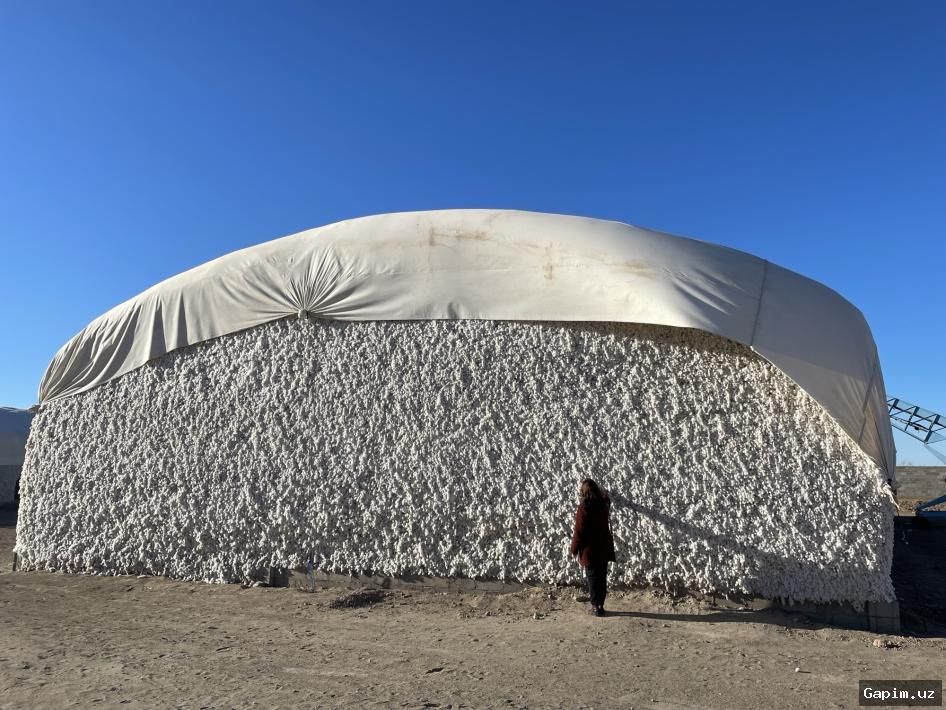
Cotton and grain in Uzbekistan are not just agricultural products; they form a system that ties together land, water, credit, labor, state plans, power, and legal order. Italian sociologist Tommaso Trevisani, in his work 'Land and Power in Khorazm,' analyzes cotton production as a complex system of power and social relations. Every year, during the cotton or grain harvest season, governors insult farmers, threaten to take away their land, and collect debts through property seizure. The Interior Ministry, prosecutor's office, and even courts back these threats.
Post-independence agrarian reforms abolished the old collective farm system but failed to completely eliminate its command-and-control mechanism. Previously, the collective farm chairman acted as an intermediary between the state plan and the rural population; now this role is distributed between the farmer and the district governor's office. The result is a paradoxical system: production risks fall on the farmer, but management and control remain with local authorities.
Agrarian reforms in Uzbekistan have followed a model of 'bureaucratic capital' rather than 'social capital' based on market relations. In the bureaucratic capital model, being a successful farmer requires more than experience and knowledge; connections with local authorities, proximity to land allocation processes, and access to resources through personal ties or administrative closeness are decisive.
The experience of Azerbaijan and Kyrgyzstan shows that the assumption that agriculture will inevitably collapse without state control is debatable. In these countries, private land ownership was recognized, and family farms became the main producers. With reduced direct state command, family farms, local agreements, and market mechanisms played a key role in organizing production.
However, blindly copying the European 'social capital' model is not possible for Uzbekistan. Each country has its own historical experience, attitudes toward land, rural social structures, family and community institutions, and established relations between the state and farmers. Agrarian reforms must be built taking into account these existing socio-economic relations.
Current problems indicate that some reforms in Uzbekistan's agricultural sector are not sufficiently aligned with real social relations. The law recognizes the farmer as an independent entrepreneur, but in practice, he remains heavily dependent on the local bureaucratic system for land, water, credit, machinery, product delivery, and crop selection. As a result, state control in the agricultural sector often manifests not as a support mechanism but as a method of constant pressure.
Therefore, the incidents in Muzrabat and Quva are not coincidental. They are manifestations of an old problem in agricultural governance. If a farmer is truly an independent entrepreneur, the governor should communicate not in a commanding tone but based on contracts, economic incentives, and the law. If a farmer fails to meet the plan, the issue should be resolved through courts, contracts, insurance, and market mechanisms, not through insults, threats, and land confiscation.
Source: www.gazeta.uz