United States President Donald Trump has ordered the Department of Defense, which his administration refers to as the “Department of War”, to pause attacks on Iran’s power infrastructure for five days. Trump made the announcement on Monday via a post on his Truth Social platform, where he claimed that Washington and Tehran had engaged in “very good and productive conversations regarding a complete and total resolution of our hostilities in the Middle East”.
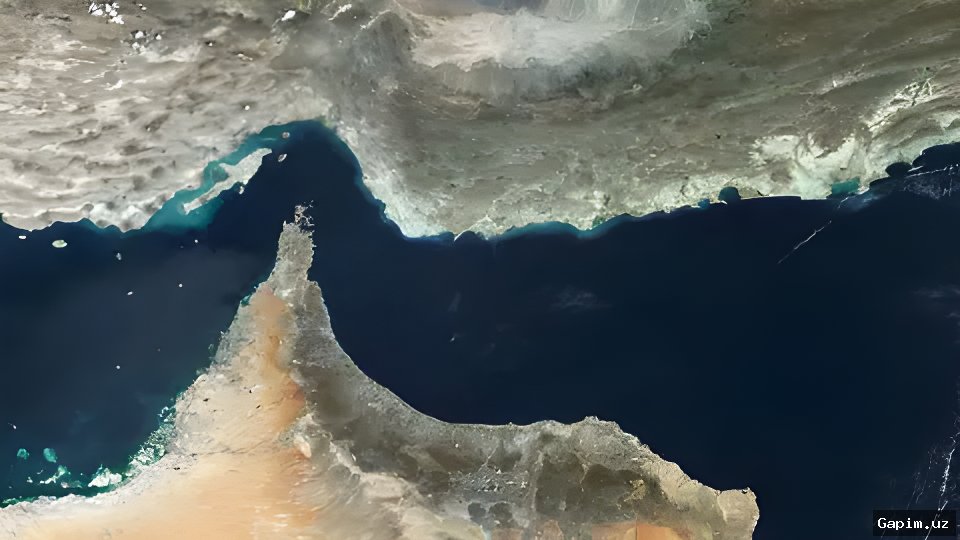
However, Iranian officials have denied these claims. Iran’s Tasnim news agency, citing an official source, reported that the Strait of Hormuz will not return to pre-war conditions, energy markets will remain unsettled, and no negotiations with the US are underway. Tehran is, however, continuing regional dialogue.
Trump’s order came one day before the expiration of his 48-hour ultimatum demanding Iran fully reopen the critical Strait of Hormuz or face US strikes on its power plants, starting with the largest. The “largest” is likely a reference to the Damavand Combined Cycle Power Plant (Pakdasht) near Tehran province, with a capacity of about 2,900 megawatts—enough to power several major cities.
Iran has threatened to retaliate by attacking power plants in Israel and those supplying electricity to US military bases in the region. Ebrahim Jabari, a senior adviser to the commander of Iran’s Islamic Revolutionary Guard Corps (IRGC), declared on March 2 that the Strait of Hormuz—through which 20% of the world’s oil and gas transits—was “closed”. This has contributed to oil prices surpassing $100 per barrel.
Iran’s Parliament Speaker Mohammad Bagher Ghalibaf stated on social media that “financial entities” financing the US military budget, including purchasers of US Treasury bonds, are “legitimate targets”. An IRGC statement warned, “If you hit electricity, we hit electricity.”
Simultaneously, Iranian Foreign Minister Abbas Araghchi and President Masoud Pezeshkian emphasized that the strait is closed only to US and Israeli vessels, remaining open to other countries. Over the past week, a handful of ships, mainly from India, Pakistan, Turkey, and China, have been allowed passage.
Regional energy infrastructure has repeatedly come under attack during the conflict. Qatar’s state-run QatarEnergy halted liquefied natural gas (LNG) production after Iranian strikes on facilities in Ras Laffan and Mesaieed, resulting in an estimated $20 billion in annual revenue losses. Saudi Arabia shut down operations at its largest domestic oil refinery, Ras Tanura, after a fire caused by debris from intercepted Iranian drones.
Iran has also threatened to target “financial entities” supporting US military assets. The IRGC-affiliated Tasnim agency released a list of offices and infrastructure of US companies like Google, Microsoft, Palantir, IBM, Nvidia, and Oracle in Israel and Gulf countries, labeling them “Iran’s new targets”.
Water scarcity exacerbates the crisis: desalination plants provide 100% of consumed water in Bahrain and Qatar, over 80% in the UAE, and 50% in Saudi Arabia. Recent attacks on desalination plants in Iran and Bahrain highlight the vulnerability of this critical infrastructure.
Source: www.aljazeera.com