Buenos Aires, Argentina – In 1977, Argentine teacher Taty Almeida, desperate to find her missing son Alejandro, a 20-year-old medical student and political activist, made a decision that would change her life forever. Her son was last seen on a street near his home in Buenos Aires, and Almeida suspected he had been snatched by government-backed paramilitary forces as part of a crackdown on political dissidents. Yet, no one could locate Alejandro, as if he had simply vanished.
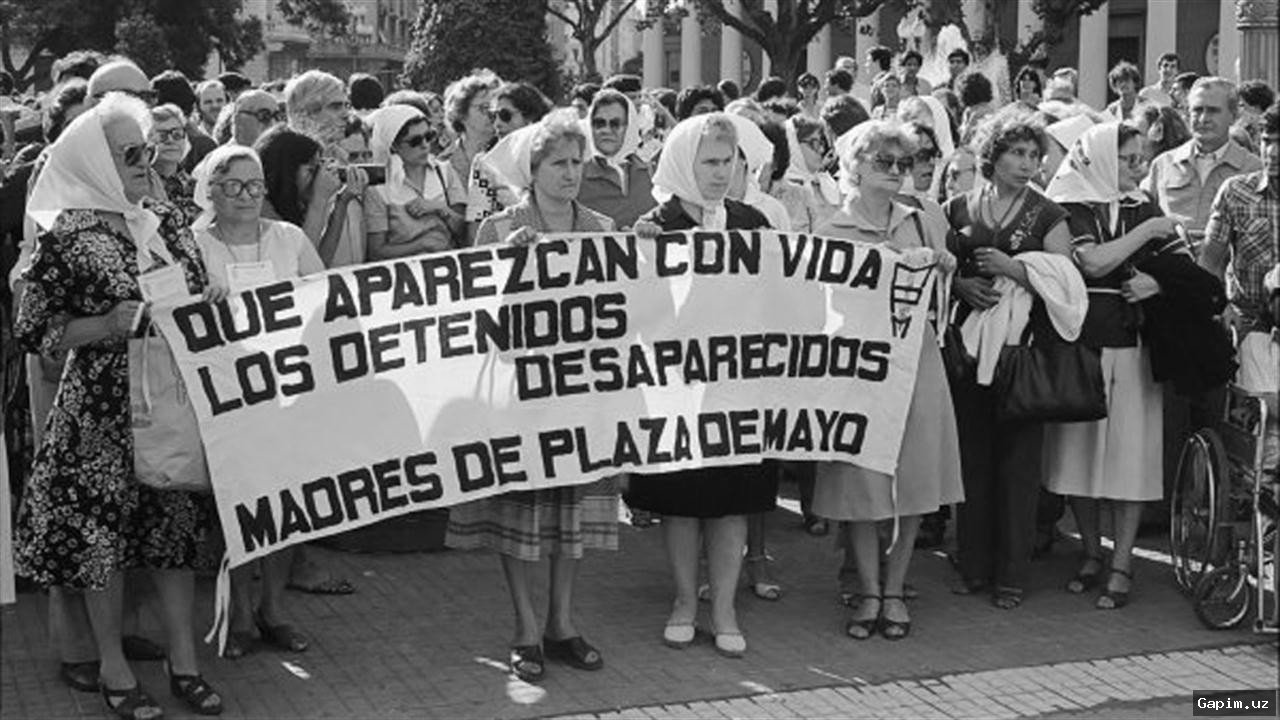
Almeida then went to the central square in Buenos Aires, steps from the presidential palace, and joined a group of bereaved women who gathered there weekly. Together, they circled the square, holding up photos of their children and asking, "Where are they?" This group became known as the Mothers of the Plaza de Mayo. For the past half-century, they have been searching for the children and grandchildren abducted during Argentina's dictatorship from 1976 to 1983.
Tuesday marks the 50th anniversary of the military coup that brought the dictatorship to power, and the Mothers of Plaza de Mayo remain active, now joined by relatives as they continue to march around the plaza each week demanding justice. However, the surviving members of the original group are elderly. Almeida herself is 95 years old. She still hopes to find Alejandro before she passes away. "I don’t want to go without at least touching Alejandro’s bones," Almeida said. "I will never lose hope or stop fighting. All we want is justice."
Yet, justice can seem increasingly out of reach. Under Argentina's current right-wing president, Javier Milei, government resources have been diverted away from accountability efforts. Milei himself has downplayed the atrocities, dismissing them as "excesses." For Almeida, these actions underscore why the Mothers of Plaza de Mayo, as an organization, must endure. "Javier Milei and his government continue to try and rewrite history, deny the human rights abuses that happened in Argentina," said Almeida. "This is why talking about our collective memory, and the need for truth and justice, are more important than ever."
Until recently, United Nations human rights experts considered Argentina a "global benchmark" for countries addressing legacies of human rights abuses. But ahead of Tuesday's anniversary, nine researchers and rapporteurs issued a joint statement denouncing "alarming setbacks" that "risk undermining four decades of exemplary progress." "Unfortunately, today we are seeing a rapid deterioration of Argentina’s global leadership in this area," the UN experts wrote last week.
Their statement pointed to several areas of concern. Funds for investigations into crimes committed under the dictatorship have been cut. Archival documents held by Argentina's navy were approved last year for destruction, though a court intervened to stop evidence from being shredded. And reports have emerged that Milei might pardon former military personnel implicated in human rights abuses. "These measures undermine the foundations of transitional justice, democracy and the rule of law," the experts said.
Even groups like the Mothers of Plaza de Mayo have faced new hurdles. Since taking power in 2023, Milei's government has ended state subsidies for the organization, and the public television program the group hosted was canceled. Still, the group has continued its efforts to locate the missing. As many as 30,000 people disappeared during the dictatorship and are presumed dead. Their bodies are still being recovered. Just last week, forensic anthropologists identified the remains of 12 people buried at a former detention center in Cordoba Province.
Then, there are the children who grew up unaware they were victims of the dictatorship. An estimated 500 babies were born in detention centers, where they were forcibly separated from their parents and placed with families loyal to the dictatorship. Most had their true parentage concealed. The Grandmothers of Plaza de Mayo, the Mothers' sister organization, have already found 140 such children, the most recent last June. Guillermo Amarilla Molfino, 45, was one of those children. Born in 1980, he now works with the Grandmothers of Plaza de Mayo to continue their search. "The work we, the new generations, are taking on is about keeping the memory of what happened alive but also, in concrete terms, about finding the grandchildren who are still missing," he said.
Amarilla Molfino uncovered his family history as an adult after watching a documentary about another man born in a detention center and stolen from his family. The experience prompted him to question his own past. "The story spoke to me because I could see many similarities with my life. The man who had taken him in was violent, and there was a constant sense of secrecy in the family," Amarilla Molfino told Al Jazeera. DNA analysis confirmed his suspicions. Since discovering he was also taken from his parents, Amarilla Molfino changed his first name from Martin to Guillermo in honor of his father, who remains missing. "Discovering my real identity, my family, was beautiful. It was like being born again," he said.
He now leads visits to the former Navy School of Mechanics (ESMA) in Buenos Aires, one of several secret detention and torture sites used during the dictatorship. Lawyer Carlos Enrique Pisoni also lost his parents, Irene Ines Bellocchio and Rolando Víctor Pisoni, during the dictatorship. They were political activists kidnapped by the military in 1977 and remain among the missing. Pisoni became an early member of the advocacy group HIJOS, a Spanish acronym for "Children for Identity and Justice Against Forgetting and Silence."
He argues that crimes like enforced disappearances continue to exact harm as long as closure is not achieved. That's where groups like HIJOS and the Mothers of Plaza de Mayo can play a crucial role: by pushing for justice. Pisoni added that their awareness campaigns can also help ensure "the past is not repeated." "The past is not in the past as long as the security forces continue to commit abuses, for example in prisons or when repressing demonstrations," Pisoni said. "This is why the fight for human rights is as important as ever."
Almeida still remembers how it felt to join the Mothers of Plaza de Mayo for the first time in 1977. "The only question I was asked was, 'Who are you missing?' And I just started crying," she said. "I told my story. It was a form of catharsis. And it all started from there." The group has since become an enduring symbol of resistance in Argentina, instantly recognizable by the white handkerchiefs the women wore in their hair, made from diaper cloth. Almeida told Al Jazeera she is not afraid of the new challenges her movement faces under the Milei government. She feels as if she has lived through it all before. "The fight will never end. It is one we will never abandon," she said. "Despite the canes and the wheelchairs, we are still standing. They have not defeated us, and they never will." Still, the fact that younger generations are carrying on the Mothers' cause has given her reason to hope. "When we see all the young people demonstrating, it fills us with pride and joy," she said. "We know they will continue our fight."
Source: www.aljazeera.com