On August 28, during a ceremony marking the 35th anniversary of Uzbekistan's independence, President Shavkat Mirziyoyev announced seven national programs to be implemented in the coming years. These programs cover key areas such as education, healthcare, economy, ecology, rule of law, neighborhood development, and foreign policy.
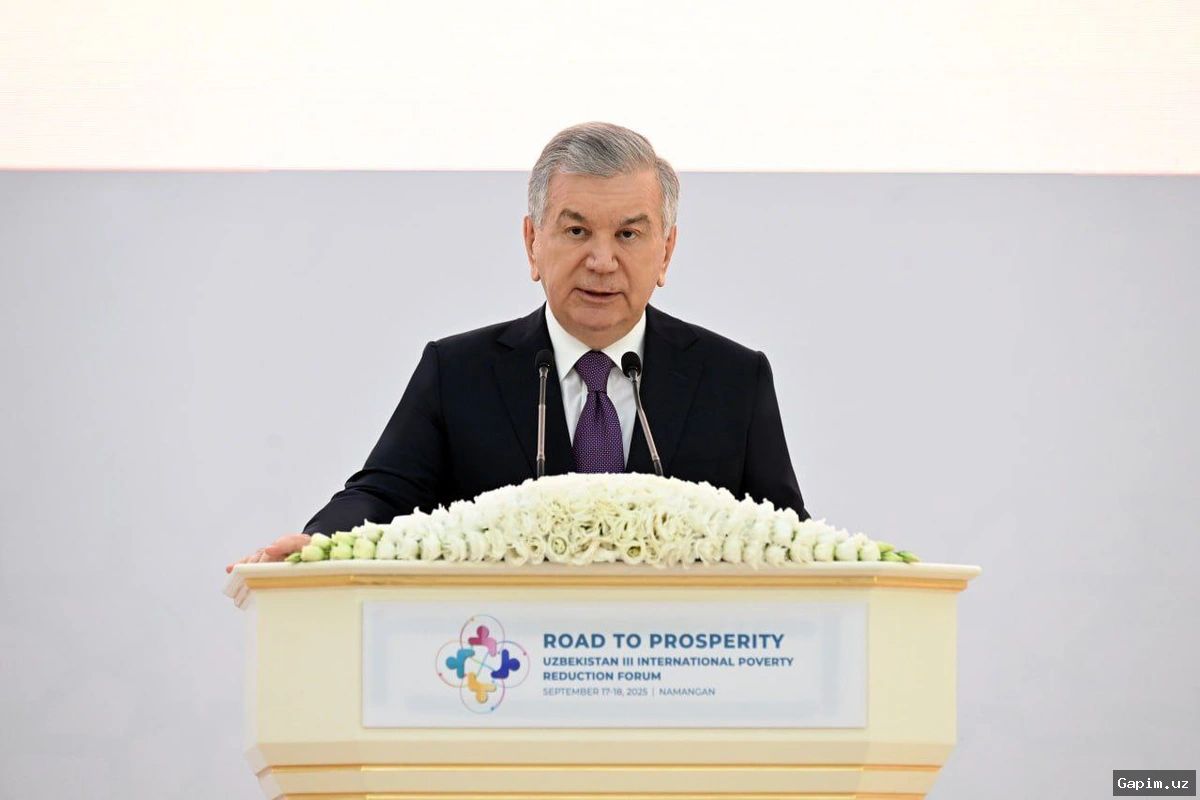
According to the president, the next decade will be a 'period of national ascent' for the country. 'We can achieve this only through the intellect, labor, and unity of our people,' he said. The first national program aims to turn knowledge and skills into the 'main capital' for future development, with a special focus on education and teachers.
In education, the government plans to achieve 100% coverage of 6-year-old children in school preparation groups and maintain benefits for opening private kindergartens. It also aims to fully integrate international assessment programs into all schools, introduce international standards in technical colleges, and increase the number of young people trained in high-income professions to 1 million. 'In short, in the new Uzbekistan, not a single young person will remain without a profession,' the president stated. Additionally, the goal is to place at least 10 universities among the world's top 1000 higher education institutions.
The second program focuses on improving public health and increasing life expectancy. Over the next five years, state spending on health is planned to reach 5% of GDP, with a shift to a preventive healthcare model and state medical insurance covering all households. 'We will transition to a healthcare model by strengthening prevention,' Mirziyoyev said. The plan also includes attracting at least five leading world clinics to Uzbekistan.
The third program envisions transitioning the economy to a model with high technology and labor productivity. It targets attracting $450 billion in foreign investment over 10 years and growing the economy to $300 billion by 2030 (previously $240 billion). The industry aims to create 2 million high-income jobs. Startups, venture financing, and artificial intelligence will be priorities. 'As a result, GDP per capita will exceed $10,000 in the next 10 years,' the head of state said.
The fourth program aims to change the population's attitude towards water and nature. Plans include 100% coverage of agricultural lands with water-saving technologies and elevating the nationwide 'Yashil Makon' (Green Space) movement to a new level. 'Green areas around schools, kindergartens, hospitals, and apartment buildings will be protected as inviolable public wealth,' the president said. The share of green zones in district and city centers is planned to reach 30%.
The fifth program is dedicated to strengthening the independence of the judicial system and making the rule of law a common value. Legal education will be organized from school onward as a unified system. The fight against cybercrime, drug addiction, and human trafficking will be intensified. The sixth program focuses on increasing the role of mahallas (neighborhoods) in society. 'The mood of our people, the well-being of families, the aspirations of youth, and the initiatives of entrepreneurs are first manifested in the mahalla,' Mirziyoyev said. The mahalla should become the 'main customer of societal development.'
The seventh program aims to strengthen Uzbekistan's role as a 'country of peace and friendship' based on tolerance. The president noted that representatives of over 130 nationalities and ethnic groups live in the country, with 16 religious confessions active. 'Interethnic harmony and religious tolerance are the golden fund of our people,' he said. Uzbekistan will continue its open, pragmatic, and peaceful foreign policy. Economic diplomacy will remain a priority, and in 2027-2029, the country will chair the Non-Aligned Movement for the first time. The president concluded: 'Today we are stronger than yesterday. God willing, tomorrow we will be stronger than today.'
Source: www.gazeta.uz